


Andrea Lynn Richardson, M.D., Ph.D.
- Associate Professor of Pathology

https://www.hopkinsmedicine.org/profiles/results/directory/profile/10001180/andrea-richardson
Cilostazol dosages: 100 mg, 50 mg
Cilostazol packs: 30 pills, 60 pills, 90 pills, 120 pills, 180 pills, 270 pills, 360 pills
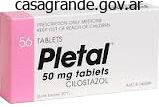
Generic 50 mg cilostazol with visa
Based on extant information it seems that nodules smaller than 5 mm are unlikely to be cancerous and people 5 to 10 mm in diameter (25%�40% of noncalcified nodules detected) are of unsure significance. Other Imaging Techniques With fluorescence endoscopy, differences in the autofluorescence traits of regular and neoplastic epithelium are used to localize lesions. Fluorescence bronchoscopy has been proven to be more sensitive than white light bronchoscopy within the detection of preneoplastic lesions in many research, together with a randomized trial. New imaging methods are presently being developed not solely to assist enhance the resolution of present imaging techniques, but also to perform imaging of lesions primarily based on biologic exercise. Both magnetic resonance and gamma digicam strategies are being examined as molecular imaging tools. This technology is being adapted for use throughout endoscopic examinations and may have the ability to provide real-time histologic analysis of bronchial mucosa. Biofluid-Based Biomarkers for Lung Cancer the underlying premise of biofluid-based biomarker research is that molecular alterations of tumor cells result in the synthesis and shedding of distinct molecular species that can be detected in biofluids. Biofluidbased detection methods are a gorgeous method for screening, due to their ease of acquisition. The success of this method will also depend not only on our capacity to enhance the specificity of our candidate biomarkers but in addition on the sensitivity of our detection assays. Although various serum biomarkers have been investigated in lung most cancers, none has proved helpful generally scientific apply, primarily because of the lack of enough sensitivity and specificity (reviewed by Barrera and colleagues169). In addition, most markers attain better sensitivity in superior illness stages as compared with stage I lung most cancers. Therefore their use for early diagnosis or screening has not had an influence on affected person care in the clinic. The high sensitivity of these screening exams, however, is associated with a low specificity. Better selection of people at highest danger of lung cancer by way of use of biomarkers of disease and genetic susceptibility might improve their constructive predictive values, reduce the false-positive charges and related unnecessary investigations or remedy, and cut back the worth of the early detection course of. Cough, dyspnea, and chest discomfort are the commonest presenting symptoms in lung most cancers (Table sixty nine. Less incessantly, patients present with hemoptysis, which rarely is very large and is normally described as streaks of recent or old blood in sputum. The unfold of illness inside the chest might result in hoarseness secondary to a left recurrent laryngeal nerve paralysis and, less frequently, phrenic nerve paralysis. The latter is related to an elevated hemidiaphragm on standard chest radiographs. Chest wall involvement is commonly accompanied by pain that in flip may function a more accurate indicator of chest wall invasion than radiographic research. Chest wall ache is usually associated to direct invasion of the pleura or chest wall by the first tumor or is due to a rib metastasis. Tenderness could also be elicited at the web site of rib involvement and, rarely, a soft-tissue Table 69. Initial evaluation of the affected person with lung most cancers: symptoms, signs, laboratory tests, and paraneoplastic syndromes. The disappearance of pleuritic chest pain may signify the event of a pleural effusion that in turn could trigger shortness of breath or could worsen existing dyspnea. Approximately one-third of patients have symptoms because of distant metastases. Lung cancer can metastasize to virtually any bone, with pain being the first presenting symptom in up to 25% of patients. However, liver function check outcomes are seldom irregular till the metastases are numerous and large. Presenting symptoms may embrace headache, nausea and vomiting, focal neurologic signs or signs, seizures, confusion, and personality changes. Subcutaneous metastases, though uncommon, portend a poor prognosis however serve as a readily accessible supply of diagnostic material.
Cheap cilostazol 50mg overnight delivery
Open biopsy was carried out, revealing a mobile cartilaginous neoplasm composed of large cells with clear cytoplasm. The mixture of the situation of the lesion, its radiographic "soap bubble" look, and the histopathologic findings confirmed the analysis of clear cell chondrosarcoma. Patterns of metastatic unfold mostly contain hematogenous dissemination to the lung, bone marrow, or another bone, and far much less typically to lymph nodes, liver, or brain. Roughly 20% of sufferers have evident metastatic disease at presentation, but subclinical metastatic disease is believed to exist in the vast majority of sufferers due to the high fee of relapse (80% to 90%) in sufferers handled with native control only. Pathology and Pathways of Spread Ewing sarcoma seems on commonplace hematoxylin-and-eosin�stained slides as monotonous sheets of small round blue cells. The lesion must be distinguished from lymphoma of bone, rhabdomyosarcoma, metastatic neuroblastoma, small cell osteosarcoma, desmoplastic small spherical cell tumors, metastatic small cell carcinoma of the lung, mesenchymal chondrosarcoma, and, often, metastatic hemangiopericytoma. Pathologically, hemorrhage and necrosis are frequent, so the accountable surgeon or interventional radiologist should obtain viable tissue for routine histopathology, sterile tissue for cytogenetics, a small pattern for electron microscopy, and tissue and fluid for tradition and sensitivity. However, Clinical Manifestations, Patient Evaluation, and Staging When it occurs at a bone primary website, Ewing sarcoma arises from within the medullary canal of bone. The tumor typically produces a painful delicate tissue mass that penetrates the cortex and surrounds the involved bone. Ewing sarcoma of the extremities primarily impacts the lengthy tubular bones, such because the femur, tibia, proximal fibula, and humerus. Approximately 20% to 40% of lesions come up within the pelvis and flat bones and sometimes produce signs that counsel other diagnoses, such as disc disease or hip pathology. Tumors that arise in the pelvis are sometimes massive (>10 cm in diameter) on the time of diagnosis, and many sufferers have demonstrable distant disease at diagnosis. Primary tumors arising within the spine most often manifest with ache and might exhibit a rapidly progressive neurologic deficit. Other clinical manifestations embrace rapid progress of the mass, native pain, and low-grade fever. Immunohistochemistry and generally cytogenetics are essential to distinguish this from other spherical cell tumors. They discovered that the typical period of symptoms before correct diagnosis was 10 months (range, 1 month to four years). Common symptoms included buttock ache (35%), presence of a mass (30%), sciatica (29%), groin ache (26%), and low again ache (21%). Inappropriate remedy for these diagnoses included seven operative procedures (two laminectomies, two d�bridements, one hip arthrotomy, one whole knee replacement, and one inguinal herniorrhaphy). Patients with nonmetastatic disease have survival charges around 70% at 5 years versus 30% for those with evident metastatic illness. Large, bulky lesions within the pelvis in nonresectable sites yield 5-year survival charges of lower than 50%. The histopathologic response of the tumor to neoadjuvant chemotherapy has been shown to be important in predicting end result. The resected specimens are sectioned and mapped for evaluation to decide the extent of tumor necrosis. Of all of the variables that were assessed, only the grade of tumor necrosis was associated with disease-free survival (P =. There was, nonetheless, a development for tumor volume to be associated with disease-free survival (P =. The operative specimens had been reviewed, and the histopathologic response to chemotherapy was graded semiquantitatively. The risk of local recurrence was additionally strongly related to the standard of the operative margins. There had been 4 native recurrences (6%) after sixty seven resections that had been thought to have negative margins. The authors concluded that histopathologic response to preoperative chemotherapy and size of the primary tumor had been an important clinical predictors of outcome of operative therapy for nonmetastatic Ewing sarcoma. Nearly every research has demonstrated that young sufferers generally have better overall and disease-specific survival in contrast with older sufferers. Radiographic Features Ewing sarcoma characteristically produces a permeative harmful pattern in bone, typically related to a delicate tissue mass.
Purchase discount cilostazol line
Other indications for subtotal colectomy embody the presence of an obstructing left-sided cancer, which has led to cecal perforation in the presence of a competent ileocecal valve; intensive diverticular disease; and a right colon lesion with extension into the sigmoid colon or, similarly, a most cancers of a redundant sigmoid colon that invades into the proper colon. First, the rectum stays in situ and therefore ongoing surveillance of this segment might be required. Second, given the short length of huge intestine remaining, increasing stool frequency and poor perform can be main issues. An different to this can be a segmental resection of each tumor-containing segment with the formation of two anastomoses. When a resection of any type is carried out laparoscopically, the vascular division is mostly carried out intracorporeally, and the colonic dissection and anastomosis extracorporeally. As was described, colon resection has classically concerned taking the mesocolon of the resected bowel at the origin of the vessels supplying the segment of colon to be removed. The rationale for these more or less standard resections relies on the idea that lymphatic tumor dissemination follows an orderly, sequential route of first-order nodes, secondorder nodes, and so forth. It is thought, nonetheless, that metastases can (rarely) be present in distant node teams without locoregional involvement-paraaortic, celiac, and portal hepatis. Intraoperatively, a hand-held scintillation probe was used, and surgeons eliminated all nodes that have been recognized as suspicious. Seven of 20 sufferers have been upstaged, and metastatic unfold was discovered at distant sites of retroperitoneum and renal hilum. In one study of T3 tumors, nodal metastases were found in 22% of circumstances if fewer than 15 lymph nodes had been harvested from the specimen, whereas 85% of instances with 15 or more recovered nodes confirmed metastasis. Surgical method, surgical procedure quantity, and affected person factors similar to age and anatomic variation alter the precise variety of nodes in a resection specimen, but the diligence and talent level of the pathologic examiner in identifying and harvesting lymph nodes in the resection specimen are also main factors. In this setting, a cecum of greater than 9 to 10 cm is at imminent danger of perforation and intervention ought to happen without delay. Similarly, tenderness over the best iliac fossa signifies that a cut up within the cecum is imminent. Obstructing colonic tumors are managed based on tumor location and clinical scenario. These embody the next: � Resection of the tumor-containing phase and formation of an finish colostomy with the rectal stump being closed off or introduced out as a mucus fistula (Hartmann procedure). Depending on the physiologic state of the affected person and the quality of the colon, a defunctioning loop ileostomy could additionally be carried out. Subtotal colectomy may be performed if the proximal colon is perforated or ischemic, secondary to the preexisting obstruction. An finish ileostomy is then common, or it could be acceptable to carry out an ileorectal anastomosis. This also facilitates visualization of the remaining colon in the intervening period, allowing potential synchronous tumors to be picked up. Not solely does it necessitate a second operation to restore intestinal continuity, a reversal of a Hartmann procedure is associated with both significant morbidity and mortality. A systematic evaluate in 2010 that included over 6000 patents indicated morbidity and mortality charges of as a lot as 50% and 5%, respectively. In this case, the proximal colon usually needs to be lavaged by way of both a proximal enterotomy or the placement of a devoted lavage system by way of the distal end. A number of studies have confirmed the protection of this method without an increase within the danger of morbidity, and particularly no improve within the rate of anastomotic leak. Although it allows for the removal of any synchronous tumors, the incidence of such lesions is just 2% to 4%. Finally, endoscopic placement of a self-expanding metallic stent is another choice that has turn out to be increasingly used lately. Bowel obstruction accounts for 80% of emergency presentations377,378-most generally as a outcome of a left-sided tumor, however approximately 20% will arise in the best colon. Although it might appear that the tumor is just adherent to the adjacent viscera by way of inflammatory adhesions, in more than 50% of cases there might be precise tumor invasion. Colonic tumors most commonly invade the small bowel, urinary bladder, gynecologic organs, and abdominal wall. In a follow-up research of greater than a hundred and fifty sufferers who underwent multivisceral resection for regionally superior illness, no sufferers who had an R1 or R2 resection survived 5 years.
Order cilostazol on line amex
All patients had recurrent stage T1 illness, with 78% of those sufferers attaining unfavorable tumor resection margins, confirmed by frozen part; the remaining sufferers had positive microscopic margins at the inside carotid artery or the skull base. Significant surgical morbidities included trismus (60%) and palatal fistula (25%). Postoperative reirradiation is beneficial for sufferers with positive surgical margins and/or superior disease200�202; its potential benefit in sufferers with negative surgical margins remains to be determined. Minimally invasive approaches allow for the transnasal removing of nasopharynx tumors without the need for a skin incision, via the utilization of high-resolution endoscopics, a selection of endoscopic instrumentation, and intraoperative navigation. A meta-analysis noted that endoscopic surgical procedure offered higher outcomes than open surgery for major T3 or T4 illness. The total complication rate from standard remedy ranges from 31% to 66%, with extreme sequelae including temporal lobe necrosis, listening to loss, xerostomia, neck fibrosis, cranial nerve dysfunction, carotid artery harm or rupture, endocrine dysfunction, soft tissue necrosis, osteonecrosis, and transverse radiation myelitis. Nasal Cavity and Paranasal Sinus Cancer Malignant tumors of the sinonasal tract are relatively rare, constituting approximately 3% of higher respiratory tract cancers. Accordingly, the scientific literature is proscribed to multiple small retrospective reviews describing the therapy and outcomes of sufferers with these tumors, which show limited progress in defining the optimal administration for these malignancies. Tumors anteromedial to the Ohngren line are thought to have a significantly higher prognosis, whereas tumors posterolateral to the road carry a worse prognosis. No normal staging system has been developed for frontal or sphenoid sinus tumors. Orbital invasion typically occurs early with cancers of the maxillary and of the ethmoid sinuses, whereas it typically is a late event for nasal cavity tumors. Malignancies beginning in the anterolateral infrastructure of the maxilla often erode via the inferolateral wall and extend into the oral cavity, with involvement of the maxillary gingival or the adjoining gingivobuccal sulcus. The threat of cervical node metastases is low except the tumor has progressed to involve mucosal surfaces with plentiful lymphatics such as the oral cavity. Adenocarcinoma of the sinonasal tract could be divided into intestinal and nonintestinal sorts. The intestinal-type sinonasal adenocarcinoma histologically resembles the adenocarcinoma of the intestines. The low-grade nonintestinal-type adenocarcinoma reveals glandular or papillary buildings with a backto-back pattern and mild to reasonable cytologic atypia, whereas highgrade adenocarcinoma demonstrates a predominant stable sample with marked cytologic atypia, necrosis, and increased mitotic activity. These lesions could manifest with or without neuroendocrine differentiation however without evidence of squamous differentiation. Cytologically, the tumor cells present a nice chromatin pattern, hyperchromasia, and variably sized nucleoli. Olfactory neuroblastoma is a malignant neuroectodermal tumor thought to originate from the olfactory membrane of the sinonasal tract. The neoplastic cells have small uniform nuclei with coarse to nice nuclear chromatin. Olfactory neuroblastoma could be graded into 4 histologic grades (the Hyam grading system) primarily based on the tumor architecture and the presence of neurofibrillary matrix, pleomorphism, mitoses, and necrosis. An initial historical past should be obtained and bodily examination performed to assess for signs and signs of orbital extension and/or base of skull involvement, and a whole cranial nerve examination should be performed to consider for any cranial neuropathies. An endoscopic examination is typically required, to assess the extent of native illness and to get hold of a biopsy specimen for pathologic analysis. Given the complicated anatomy, endoscopic biopsies are often carried out by a head and neck surgeon, and normally the affected person would require delicate sedation for complete analysis. Treatment Strategy Management of paranasal sinus malignancies is primarily surgical, with adjuvant radiation and presumably chemotherapy for superior lesions. Advanced nasal endoscopic procedures are being evaluated for their use within the surgical management of sinus tumors, especially for localized T1�2 illness. Multiple single-institution reviews have concluded that disease management with endoscopic surgical procedure could additionally be equivalent to commonplace external approaches in chosen sufferers, with glorious practical outcomes. For smaller, medially primarily based tumors, a medial maxillectomy may be performed using a sublabial or midface degloving approach, during which incisions are made underneath the higher lip. For larger lesions, well-placed pores and skin incisions within the nasal crease (lateral rhinotomy) and upper lip (upper cheek flap) may be required for access. Reconstruction in these cases usually entails a pores and skin graft or acellular dermal graft to reline the mucosal surfaces. If a portion of the exhausting palate has been resected, a maxillary obturator could also be fashioned as a detachable equipment to recreate the onerous palate.
Buy generic cilostazol online
Approximately 85% of recurrences, nonetheless, might be detected within the first three years after resection of the first. The use of antiangiogenic therapies perioperatively would even have a potential role in quickly controlling metastatic illness before surgical procedure. Initially, small, single-institution studies demonstrated that this method is feasible in phrases of security and should obtain significant disease control. Review of a number of research revealed that 50% to 90% of patients demonstrated some degree of tumor regression within the primary lesion; however, the diploma of regression varied from 9% to 26% from baseline, which is of unclear clinical significance. Adjuvant Therapy Until just lately, no studies had demonstrated a clinical profit to adjuvant therapy after nephrectomy in unselected sufferers. Eligible patients had pathologic stage high-grade T1b or greater disease that was fully resected with no radiographic proof of metastases and with enough cardiac, renal, and hepatic function. The most common grade 3 or worse antagonistic occasions were hypertension (104 [17%] patients on sunitinib and 102 [16%] patients on sorafenib), hand-foot syndrome (94 [15%] patients on sunitinib and 208 [33%] patients on sorafenib), rash (15 [2%] sufferers on sunitinib and 95 [15%] sufferers on sorafenib), and fatigue (104 [17%] sufferers on sunitinib and 44 [7%] sufferers on sorafenib). Because of high rates of toxicity-related discontinuation after 1323 patients had enrolled, the beginning doses were decreased. At 5 years of follow-up, the proportion of patients who had been disease free after having taken sunitinib was fifty nine. Although the intent of modifying the protocol to cut back the starting pazopanib dose from 800 mg to 600 mg was to enhance tolerability, antagonistic events have been ultimately related between the 600 mg and 800 mg teams. In this trial, 246 sufferers who had been acceptable candidates for nephrectomy have been randomized to radical nephrectomy adopted by therapy with interferon alfa-2b (n = 123) or interferon alfa-2b alone (n = 123). As mentioned earlier, the two previously described randomized trials had been conducted within the interferon period. Stable or responding sufferers obtained two to five programs of therapy at 8- to 12-week intervals and then had been noticed whereas not receiving any additional remedy. Responses have been seen in 37 (15%) of the 255 patients, together with 17 full responses (7%) and 20 partial responses (8%). The median period of response was 54 months for all the responders and 20 months for partial responders; the median has not yet been reached for full responders. Favorable predictors of survival by multivariate evaluation included a single website of first recurrence, curative intent resection, and a disease-free interval of greater than 12 months. Not surprisingly, the positioning of metastatic illness additionally has implications for survival. Resection of solitary brain metastases was associated with poor consequence, with an 18% 5-year total price. Historically, surgical resection has been the usual of care in patients with a single operable mind metastasis, good efficiency status, and managed systemic disease, based on the findings of a number of retrospective analyses and two prospective randomized trials demonstrating improved survival with surgical procedure plus whole-brain radiation, in contrast with radiation alone. Surgery must also be thought of in patients with signs from vasogenic edema or mass effect, requiring immediate palliation. One-third of the patients skilled a grade three or 4 immune-mediated toxicity, with significant affiliation between autoimmune events and tumor regression. The majority of the patients had less severe toxicities, similar to rash, fatigue, and itching. Ten of 34 sufferers (29%) had an goal response, with median responses lasting 12. It is virtually ubiquitous in human tumors, and higher levels correlate with more aggressive illness in kidney most cancers. Sorafenib Sorafenib (Nexavar) is an oral kinase inhibitor focusing on each tumor cells and the tumor vasculature. Several steps in the process of tumor angiogenesis are being targeted for therapeutic purposes. Consequently, crossover was permitted from placebo to sorafenib, starting in May 2005. Partial responses were reported as the most effective response in 10% of patients receiving sorafenib and in 2% of those receiving placebo. Diarrhea, rash, fatigue, and hand-foot pores and skin reactions had been the most common antagonistic events related to sorafenib.
Purchase cilostazol from india
Physical examination is remarkably reliable for predicting involvement of corpora, and tumor measurement, which is linked closely to prognosis, is rapidly assessed. Patient counseling concerning the anticipated consequence of surgical procedure is done primarily based on bodily examination findings. Sensitivity ranges from 75% to 88% and specificity from 83% to 98% for correct detection of T2 disease. Small lesions confined to the glans or foreskin are sometimes sampled via circumcision or excisional biopsy. Large lesions are often biopsied or subjected to frozen part before definitive therapy. Unfortunately, more than half of patients will have invasive illness on the time of diagnosis. Fifty p.c of tumors arise on the glans itself, 20% arise on the foreskin, and 10% involve each the glans and the foreskin. Small tumors of the glans and prepuce are very not often metastatic at presentation; however, tumors involving 75% of the penile shaft or extra are nearly always metastatic. Histologically, these tumors have a hyperkeratotic dermis with cords of carcinoma cells extending into deeper tissue layers. There are also intercellular bridges, keratin, and keratin pearls distinguished all through the specimen. Factors that affect grading in these systems are the variety of mitotic cells per high-power field, diploma of keratinization and mobile atypia, and infiltration of inflammatory cells into the tumor. Application of this system revealed 80% survival among patients with low-grade tumors. These classes revealed metastatic disease in 42% with superficial illness and 82% with vertical tumor development. Exophytic tumors have a excessive degree of keratinization at histologic examination, with cells that seem extra differentiated. Conversely, ulcerative penile malignancy is extra typically poorly differentiated with a better incidence of lymph node involvement. Metastasis occurs with invasion of the lymphatic bed of the prepuce and penile pores and skin. The anatomy of lymphatic drainage has complicated efforts to develop dependable sentinel node biopsy techniques. Once the superficial lymphatic system is entered, tumor spreads to the deep inguinal nodes under the fascia lata and medial to the femoral vein. The presence of palpable inguinal adenopathy at the time of prognosis is a crucial concern; however, the function of an infection of the tumor is commonly confounding to the willpower of malignant lymph node involvement. The presence of matted, cumbersome nodes is strongly suggestive of progression to pelvic lymph node involvement. Others use ultrasound steerage for needle aspiration of lymph nodes, citing the flexibility of good ultrasonographers to reliably present changes in the nodal architecture that may counsel the presence of malignancy. Even earlier than the utilization of sentinel node biopsy for breast most cancers, it was investigated for penile most cancers staging. In the original inception of sentinel lymph node biopsy for penile most cancers, the false-negative fee was thought to be unacceptably excessive. Newer strategies using a mix of radiotracers and dye and the addition of real-time ultrasonography have decreased the false-negative price from 19. The optimistic predictive worth for nodal metastasis is as high as one hundred pc when features similar to size higher than 1. This holds true for pelvic nodal assessment, aside from the scale criteria. On the basis of 10 sufferers, this modality was evaluated node for node and was discovered to have a 100 percent sensitivity and 97% specificity in contrast with the pathologic results after lymphadenectomy. Late within the illness course of, patients might develop erosion of groin metastasis to the skin or femoral vessels necessitating surgical intervention regardless of curative intent.
Buy cilostazol with amex
Although there was no statistically vital survival advantage (58% versus 65%; P =. Patients exhibiting complete response or partial response acquired a further 15- or 20-Gy radiation increase, respectively, and salvage surgery was reserved for patients with less than a partial response. There was a major advantage of chemoradiotherapy over radiotherapy alone when it comes to full response (80% for chemoradiotherapy versus 54% for radiotherapy alone), 5-year native management (68% versus 50%), and 5-year colostomy-free survival (72% versus 40% for radiation alone). Over 80% of patients with recognized recurrence websites had both solely native recurrence or a neighborhood recurrence component. Given the poor outcome with radical surgical procedure alone, Nigro and colleagues evaluated the use of preoperative chemoradiation remedy for anal canal squamous cell cancer. An extra 14 sufferers had an entire scientific response and underwent local excision that confirmed pathologic full response. Role of Mitomycin C in Combined-Modality Therapy Although the earlier randomized trials demonstrated a benefit to local tumor management with the addition of chemotherapy to radiotherapy as definitive remedy of anal canal most cancers, the acute toxicity related to the addition of chemotherapy, notably the mitomycin element, is substantial. There was a 23% rate of grade 4 toxicity (notably hematologic and dermatologic) and a 2. An necessary caveat, however, is the lengthy regression interval of squamous cell tumors in some patients after chemoradiotherapy (as lengthy as a year). Because of the hematologic toxicity reported with mitomycin, less myelosuppressive chemotherapy regimens have been investigated. For these high-risk sufferers, the 56% colostomy-free survival fee and 80% full response fee have been felt to be very promising. The major finish level was 5-year disease-free survival, with a secondary intent of reduced acute toxicity. For T3, T4, node-positive disease or T2 tumors with residual disease after 45 Gy, an additional boost of 10 to 14 Gy could be delivered at the discretion of the treating physician in 2-Gy fractions, for a complete dose of fifty five to fifty nine Gy. On preliminary report, no important difference was seen in 5-year disease-free survival (60% versus 54%; P =. However, the 5-year colostomy fee was 10% in sufferers receiving mitomycin versus 19% within the cisplatin arm (P =. The rates of grades three and 4 acute nonhematologic toxicity were 62% in the mitomycin group and 68% in the cisplatin group, and the difference was not statistically completely different. The authors advised that this marginal benefit has to be evaluated within the context of the larger assets wanted to administer cisplatin, which entails two courses of all-day intravenous remedy with hydration, compared with solely a single dose of mitomycin delivered over 10 minutes. The 3-year colostomy-free survival price was additionally related in all four teams: 73% within the mitomycin, upkeep group; 75% in the cisplatin, maintenance group; 75% within the mitomycin, no upkeep group; and 72% in the cisplatin, no maintenance group. With regard to upkeep therapy, 3-year progression-free survival was 74% in the maintenance chemotherapy arm versus 73% in the no upkeep arm (hazard ratio, 0. Nonetheless, cisplatin-based chemotherapy may be thought-about in immunocompromised sufferers or those who may not tolerate extra hematologic toxicity. The optimum dosage and timing of mitomycin administration in anal most cancers remedy to maximize outcomes and reduce toxicity is unknown. Yeung and colleagues performed a retrospective evaluation to immediately examine anal most cancers sufferers handled with one or two concurrent cycles of mitomycin. Although two doses of mitomycin at 10 mg/m2 stays normal in the United States, the findings of this retrospective examine suggest that the second mitomycin cycle could also be safely omitted if needed. Several studies have reported on using capecitabine in the definitive therapy for anal most cancers. Of the 31 study sufferers, grade 3 or 4 toxicities had been experienced by 14 patients, mostly severe moist pores and skin desquamation. With a median follow-up of 20 months, of the sixty two sufferers with squamous cell histologic sort, only 4 sufferers (6%) had recorded relapses. Goodman and colleagues retrospectively reviewed the information of 107 consecutive sufferers with nonmetastatic anal most cancers handled with definitive chemoradiation at Memorial Sloan-Kettering Cancer Center. Based on these data, and because of its superior toxicity profile, the mix of capecitabine and mitomycin may turn into a spine for future research evaluating novel agents with chemoradiation for anal cancer. Time and Dose Considerations in Chemoradiotherapy for Anal Cancer Overall treatment time has been shown to have an effect on end result after radiotherapy in lots of cancer types. This is of relevance for definitive chemoradiotherapy for anal most cancers with regard to each the usage of induction chemotherapy and the use of split-course radiotherapy regimens to enable for dose escalation. On multivariate analysis, a major affiliation with local failure and a statistical development towards an association with colostomy failure and total therapy duration were seen.
Buy discount cilostazol
It is a particular problem to well being care suppliers to be vigilant for a low-incidence disease corresponding to penile most cancers in the background of a various vary of visible dermatologic manifestations that might be benign. It ought to be acknowledged by suppliers that pores and skin lesions of the penis may be fairly disturbing to patients, but at the same time embarrassment usually causes them to keep away from seeking therapy. Therefore when a affected person has a complaint a few penile skin lesion, a diligent effort ought to be made for prognosis. Perimeatal blanched plaques and/or scaled areas are seen that extend into the urethral meatus. Microscopically the appearance is according to acanthosis, parakeratosis, and hyperkeratosis. Leukoplakia may be seen in proximity to malignant lesions and is a response to recurrent irritation or irritation. Because of its association with comorbid malignancy, nevertheless, remedy is excision or biopsy adopted by shut follow-up. Up to 20% of males with leukoplakia have been shown to ultimately develop penile most cancers. This is seen virtually solely in uncircumcised boys and men and circumcision is commonly curative. Although the condition is most often a grievance of middle-aged males, epidemiologic data support prognosis at any age in males from 2 to 90. Patients may expertise painful erections-particularly a burning sensation when the phallus is engorged, phimosis, or dysuria. Circumcision is a divisive matter in the medical literature, with sturdy proponents each for and against routine circumcision. Many political authorities are withdrawing public funding for circumcision primarily based on analysis of cost-effectiveness in stopping illness. Also, opponents of circumcision argue that the process is primarily beauty and is performed without the assent of the affected person. Histologically, these lesions reveal diffuse adjustments all through the squamous epithelial cell layers including keratinocyte hyperplasia, nuclear atypia with many mitoses, proliferation of enlarged hyperchromatic cells, multinucleated cells, and loss of polarity inside most cells. Presence of inflammatory cell infiltration and increased density of microvasculature is widespread. The gross appearance of Kaposi sarcoma is of erythematous nodules, with sharp margins discovered most often on the glans penis. Standard treatment consists of native excision, laser ablation, or palliative radiation. The typical look of basal cell carcinoma of the penis is a well-circumscribed lesion with clear borders and central pitting. Given the gradual rate of progress and lack of metastasis, native excision is often healing. Wide native excision with a 3- to 5-cm margin is the remedy of selection for lesions less than 1. These tumors include penile schwannoma, plexiform neurofibroma, vascular hemangioendothelioma, leiomyosarcoma, rhabdomyosarcoma, epithelioid sarcoma, Ewing sarcoma, mucoepidermoid carcinoma, and synovial sarcoma. This illness is seen in older males and appears as a well-demarcated, erythematous, eczematous lesion. This entity arises from pluripotent intraepidermal cells undergoing malignant transformation during apocrine differentiation. However, retrospective analysis of sufferers with penoscrotal Paget disease reveals that 92% of those with related malignancy have genitourinary pathologic findings. In addition, histologic sections of bowenoid papules reveal that the extra atypical-appearing cells tend to be discovered among the prime epithelial cell layers and within the upper portion of the sweat glands. Because of histologic similarities, a physician should combine the scientific presentation and the histologic findings to confidently arrive at the prognosis. The rete pegs of those lesions are sometimes seen penetrating deeply into surrounding tissue. Therefore local management is the primary goal and should require partial or total penectomy. To date, no large-scale trials of topical or radiation therapies have shown efficacy. The widespread presentation of a penile metastasis is a number of nodules alongside the penile skin with occasional ulceration which will have the appearance of a syphilitic chancre. Almost 50% of patients could have in depth involvement of the corpora cavernosa, which accounts for the frequent presentation of priapism.
References
- White SI, Frenkiel B, Martin PJ. A ten-year audit of perforated sigmoid diverticulitis: highlighting the outcomes of laparoscopic lavage. Dis Colon Rectum. 2010;53(11):1537-1541.
- Ricart E, Panaccione R, Loftus EV Jr, et al: Autoimmune disorders and extraintestinal manifestations in first-degree familial and sporadic inflammatory bowel disease: A case-control study. Inflamm Bowel Dis 10:207, 2004.
- Carrol W, Brookfield D. Lumbar puncture following febrile convulsion. Arch Dis Child 2002;87:238-40.
- Gore RB, Durrell B, Bishop S, et al. High-efficiency particulate arrest-filter vacuum cleaners increase personal cat allergen exposure in homes with cats. J Allergy Clin Immunol 2003; 111: 784-787.