

Daniel Bainbridge, MD, FRCPC
- Associate Professor
- Anesthesia and Perioperative Medicine
- Schulich School of Medicine
- University of Western Ontario
- London, Ontario, Canada
Hydrochlorothiazide dosages: 25 mg, 12.5 mg
Hydrochlorothiazide packs: 60 pills, 90 pills, 120 pills, 180 pills, 270 pills, 360 pills
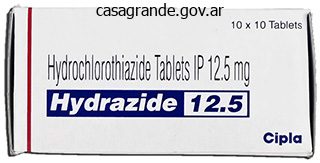
Generic hydrochlorothiazide 25mg on line
Sensations similar to sexual pleasure, rest after a meal, rage, and worry are associated to hypothalamic features. The hypothalamus additionally interacts with the reticular activating system in the brainstem to coordinate the sleep-wake cycle (table thirteen. Describe the structure of the cerebrum, together with the lobes, fissures, sulci, cerebral cortex, and cerebral medulla. Brain dimension is said to physique dimension; bigger brains are associated with bigger bodies, not with greater intelligence. The cerebrum is split into left and proper hemispheres by a longitudinal fissure (figure thirteen. The most conspicuous features on the surface of each hemisphere are numerous folds known as gyri (jr; sing. It extends across the lateral surface of the cerebrum from superior to inferior to separate the frontal and parietal lobes. Anterior to the central sulcus is the precentral gyrus, which is the first motor cortex. Posterior to the central sulcus is the postcentral gyrus, which is the primary somatic sensory cortex (see chapter 14). The general sample of the gyri is similar in all normal human brains, but some variation exists between people and even between the two hemispheres of the same cerebrum. Each cerebral hemisphere is divided into lobes, that are named for the skull bones overlying every of them (figure thirteen. The anterior region, called the prefrontal cortex, is involved in persona and decision making (see chapter 14). The parietal lobe is the major heart for receiving and evaluating most sensory information, except for scent, hearing, style, and imaginative and prescient. The temporal lobe receives and evaluates enter for scent and listening to and performs an important function in reminiscence. Its anterior and inferior portions are related to such mind functions as summary thought and judgment. The temporal lobe is separated from the the rest of the cerebrum by a lateral fissure, and deep throughout the fissure is the insula (insoo-l; island). The insula receives and evaluates taste data and is often referred to as a fifth lobe. The grey matter on the outer floor of the cerebrum is the cerebral cortex, and clusters of grey matter deep contained in the mind are nuclei. The cerebral cortex accommodates a variety of neuron varieties, named largely for his or her form, corresponding to fusiform cells, stellate cells, and pyramidal cells (figure 13. The white matter of the mind between the cortex and the nuclei is the cerebral medulla. The fibers in these tracts fall into three primary classes: association, commissural, and projection. Association fibers join areas of the cerebral cortex within the similar hemisphere. The largest bundle of commissural fibers is the corpus callosum (krps ka-lsm; see figure 13. Projection fibers connect the cerebrum to other components of the brain and spinal wire (figure thirteen. Basal Nuclei the basal nuclei are a bunch of functionally associated nuclei beneath the cortex (subcortical). These nuclei are located bilaterally in the inferior cerebrum, diencephalon, and midbrain (figure thirteen. The basal nuclei are the most important nuclei of the mind and occupy a large a part of the cerebrum. The nuclei within the cerebrum are collectively called the corpus striatum (krps str-tm) and include the caudate (kawdt; having a tail) nucleus and the lentiform (lenti-frm; lens-shaped) nucleus. The lentiform nucleus, in flip, is split into a lateral putamen (p-tmen) and the medial globus pallidus (glbs palli-ds; pale globe). Two further basal nuclei are the subthalamic nucleus in the diencephalon and the substantia nigra in the midbrain.
Order hydrochlorothiazide 12.5mg online
Long-range communication throughout cortical areas could additionally be mirrored in theta (4�8 Hz) and alpha (8�12 Hz) oscillations, and sufferers with schizophrenia have reductions in coherent coordinated theta and alpha activity, and fewer interconnected areas than do wholesome topics. Furthermore, alpha exercise is reduced by consideration, and patients present abnormalities in modulating alpha by consideration. Four main dopamine pathways have been implicated in the neurobiology of schizophrenia and the unwanted effects of antipsychotic medicine: (1) mesolimbic, (2) mesocortical, (3) nigrostriatal, and (4) tuberoinfundibular. The mesolimbic pathway tasks from dopamine-producing neurons within the brainstem to the limbic areas of the brain, particularly the human homologue of the nucleus accumbens, which has a central function in reward circuitry. Hyperactivity of the mesolimbic dopamine pathway may underlie a few of the constructive symptoms of schizophrenia, and a consequence of this pathophysiology might be the defective association of reward or salience to occasions. The mesocortical pathway additionally arises from the brainstem but projects to cortical areas. The nigrostriatal pathway initiatives from the substantia nigra to the basal ganglia, the most important web site of motion of classic antipsychotics, which is believed to be a significant site of dopamineblocking antipsychotics, with side effects that may embrace rigidity and tardive dyskinesia. The tuberoinfundibular pathway, which tasks from the hypothalamus to the anterior pituitary, can also contribute to unwanted effects of antipsychotic medications, such as hyperprolactinemia. Such deficits in smooth-pursuit eye movements have also been noticed in firstepisode schizophrenia. Recent work suggests that genetic variants in dopamine influence eye-movement initiation, and those in glutamate have an result on pursuit upkeep (Lencer et al. Serotonin and acetylcholine are modulatory neurotransmitters which were increasingly implicated in schizophrenia. Like dopamine, serotonin pathways originate in the brainstem and project to a quantity of mind areas, together with the cortex. In contrast, acetylcholine is produced primarily by basal forebrain neurons and activates receptors across multiple brain regions that are also sensitive either to nicotine or to muscarine. Recent proof implicates the 7-containing nicotinic acetylcholine-receptor system in the pathology of schizophrenia. For example, the 7 subunit gene is linked to schizophrenia, and postmortem human studies have found a reduction in the expression of hippocampal 7 receptors in schizophrenia. Interestingly, charges of cigarette smoking in topics with schizophrenia have been reported to be as high as 90%, in comparison with 33% in the general population and between 45�70% in sufferers with different psychiatric diagnoses, resulting in the speculation that nicotine is treating a fundamental drawback in schizophrenia. In schizophrenia, nicotine administration improves working reminiscence and selective consideration, whereas withdrawal exacerbates cognitive impairments. In terms of functional associations, acetylcholine and 7 deficits have been associated with a failure to dampen the auditory evoked response to repeated stimuli, the so-called P50-gating response. Clearly, a quantity of neurotransmitter systems are implicated in schizophrenia (Table 5. Although neurotransmitters and neuromodulators are sometimes referred to as systems-e. This staggering interconnectedness permits the brain to carry out highly complex features similar to working reminiscence and selective consideration. Dorsolateral prefrontal cortex circuitry, significantly with respect to deficits in working reminiscence, has served as a model for pathophysiology in schizophrenia. Recall that gamma exercise is thought to replicate local circuit processing, and with respect to working memory, is thought to mirror maintenance of things in memory. Light gray hint represents recording of motion potential spikes from a inhabitants of pyramidal cells. For instance, reciprocal excitatory connections in pyramidal neurons situated within the prefrontal cortical superficial layers are necessary for working memory perform (Arnsten et al. In schizophrenia, decrease dendritic spine density is noticed in these cells (garey et al. According to the second speculation, fewer dendritic spines on cortical layer three PyR, and thus much less excitatory enter to these neurons, would end in decrease exercise (reviewed in Lewis et al. The ensuing discount of inhibition would partially restore the balance between excitation and inhibition, although at a lower set point and maybe with more restricted dynamic range. Thus cognitive deficits in schizophrenia can arise from disturbances in many sources of synaptic inhibition, resulting in alteration of many kinds of cortical network activity.
12.5mg hydrochlorothiazide amex
There are different challenges, in fact, together with lack of accessibility, stigma, and insurance coverage protection issues. Treatments got five days per week for a month, specializing in the left dorsolateral prefrontal cortex. The remedies had been tolerable, with few dropouts and no main unwanted aspect effects; lively therapy helped greater than sham in lowering adverse symptom burden. This result suggests that a symptom profile that has traditionally been hard to deal with might yield to this new strategy. The treatment is run by putting an anode on the left dorsolateral prefrontal cortex and a cathode over the temporoparietal cortex. Some of those remedies date again a half-century or extra, and some are comparatively new. But our understanding of when and how to use these treatments is proscribed, and lots of signs reply poorly to existing remedies. In the coming a long time, three broad developments are prone to influence the use of present therapies and help with the development of novel approaches to managing psychotic illness: translational neuroscience, personalized treatment, and phase-specific therapy. First and most essential, translational neuroscience promises a "ground-up" strategy to therapeutic improvement. By learning extra about brain functioning, and the way the signs of psychosis are generated, we could possibly identify new targets for medication. The rise of "psychogenomics," nevertheless, has led to the hope that we could sometime have rational selection of treatment. Other personalised therapy approaches may contain predicting metabolism of medicines, identifying drug�drug interplay risks, or figuring out specific dopamine-receptor targets in people. Finally, more and more work is inspecting how remedies work in different phases of the illness. As extra effectiveness research is done, we might have clearer ideas about phase-specific approaches: when 240 Schizophrenia and Related Disorders to use clozapine, which antipsychotic is best in first-episode illness, and the way medicines mix with psychosocial treatments at totally different illness phases. Other tendencies are prone to affect the somatic remedy pipeline, together with new drug growth. It is most likely, nonetheless, that a combination of approaches might enable a extra individualized, pathophysiologically based mostly method to each analysis and treatment strategies. Antipsychotics, developed within the Fifties, were found serendipitously but helped create the worldwide psychopharmacology industry of right now and contributed to deinstitutionalization and the rise of community psychiatry, changing the way sufferers are treated and psychiatrists practice. Although these revolutionary therapies have been powerful and influential, and are an essential a part of the care for people with psychotic issues, they also have their limits when it comes to their efficacy and toxicity. Treatment-refractory patients have pushed providers to strive a host of polypharmacy/augmentation strategies, despite risks and restricted information; clozapine stays the solely option for such individuals but is difficult to use. Future tendencies in somatic therapies for psychosis might assist us develop better treatments for broader signs, treatments that could be higher targeted to specific individuals on the most applicable times. Atypical (second-generation) antipsychotics primarily serve as antagonists to what neurotransmitter system(s) The affected person asks about how the model new treatment compares to her last medication, haloperidol. Olanzapine has more danger for metabolic syndrome (elevated glucose, weight gain, and so forth. A 31-year-old male with schizoaffective disorder who was given fluphenazine (Prolixin), fluoxetine (Prozac) and motrin complains of stiffness in his neck and jaw. A 35-year-old man is transferred from one other hospital due to intractable hallucinations. He has more and more withdrawn from himself socially because of voices criticizing him and commanding him to "end all of it. For refractory auditory hallucinations, unresponsive to clozapine, what may be the most effective neuromodulation choice presently, based mostly on therapy studies and pointers Dopamine antagonism is the primary mechanism of most antipsychotics; which one instead works primarily as a partial agonist at the D2 receptor You have a patient who is very concerned about unwanted aspect effects, notably both metabolic and motion, and would love you to pick an antipsychotic that has the lowest danger of such unwanted effects. Ziprasidone 244 Schizophrenia and Related Disorders Key Learning Points � Antipsychotics are one part of a broad, disease-management approach for managing psychosis, but are an essential a part of the biopsychosocial therapy for psychotic problems, working notably properly in treating positive signs acutely, and for relapse prevention. Comparative effectiveness of fluphenazine decanoate injections each 2 weeks versus each 6 weeks.
Purchase hydrochlorothiazide 25mg online
Treatment of the dysfunction by transplanting fetal tissues or stem cells from adult tissues which may be capable of producing dopamine is also under investigation. The oblique pathways and their interconnections are indicated by the sunshine purple arrows. Most axons decussate in the medulla oblongata and descend in the lateral corticospinal tracts within the spinal cord. Some axons continue as the anterior corticospinal tracts and decussate within the spinal cord. Upper motor neurons synapse with interneurons that synapse with decrease motor neurons. The vestibulocerebellum, or flocculonodular lobe, receives direct input from the vestibular buildings, especially the semicircular canals (see chapter 15), and sends axons to the vestibular nuclei of the brainstem. It also helps control balance, particularly during actions, and coordinate eye movement. The spinocerebellum consists of the vermis and the medial portion of the lateral hemisphere. The spinocerebellum helps accomplish fine motor coordination of easy movements by means of its comparator perform. A comparator is a sensing system that compares the information from two sources-in this case, the motor cortex and peripheral structures (figure 14. In this manner, the comparator operate coordinates easy actions, similar to touching your nose. Action potentials from the motor cortex descend into the spinal twine to provoke voluntary movements. At the same time, motion potentials are carried from the motor cortex to the cerebellum to give the cerebellar neurons data representing the supposed movement. In addition, action potentials from proprioceptive neurons ascend through the spinocerebellar tracts and concurrently arrive at the cerebellum. Proprioceptive neurons innervate the joints and tendons of the construction being moved, such because the elbow or knee, and supply information about the position of the physique or physique elements. These action potentials give the cerebellar neurons info from the periphery concerning the actual actions. The cerebellum compares the motion potentials from the motor cortex with those from the moving constructions. If a difference is detected, the cerebellum sends motion potentials by way of the thalamus to the motor cortex and to the spinal twine to right the discrepancy. The cerebrocerebellum consists of the lateral two-thirds of the lateral hemispheres. It communicates with the motor, premotor, and prefrontal portions of the cerebral cortex in planning and working towards rapid, advanced motor actions that require coordination and coaching. These connections from the cerebrum to the cerebellum constitute a large portion of the axons within the cerebral peduncles. Because of the cerebrocerebellum, with coaching, an individual can perform highly skilled and rapid actions more rapidly than would be possible with solely the comparator function of the cerebellum. In these circumstances, the cerebellum participates with the cerebrum in studying highly specialized movements, corresponding to enjoying the piano or swinging a baseball bat. The cerebrocerebellum can be involved in cognitive features, such as rhythm, conceptualization of time intervals, some word associations, and options to pegboard puzzles-tasks once thought to occur only in the cerebrum. Cerebellar dysfunction results in (1) decreased muscle tone, (2) stability impairment, (3) an inclination to overshoot when reaching for or touching an object, and (4) an intention tremor, which is shaking in the arms that occurs solely while making an attempt to carry out a task. Cerebellar dysfunction results in decreased muscle tone and an intention tremor, whereas basal nuclei dysfunction usually ends in increased muscle tone and a resting tremor. What are the three functional components of the cerebellum, and what are the functions of every Sensory Input Projecting Through the Brainstem the brainstem receives sensory input from collateral branches of ascending spinal wire pathways and from the axons of most cranial nerves. As noted earlier, fibers of the spinothalamic tracts passing via the brainstem are joined by fibers of the trigeminothalamic tract. This tract carries tactile sensations, such as pain and temperature, two-point discrimination, and lightweight contact, from the face, the nasal cavity, and the oral cavity, including the teeth. In addition, the brainstem accommodates the nuclei of most cranial nerves (see desk thirteen.
Order hydrochlorothiazide 12.5 mg on-line
The structure of a given joint is instantly correlated with its diploma of motion. Movable joints are locations within the physique the place the bones move in shut contact with one another. When working with machines, we all know that the components that make contact require essentially the most upkeep. But in our bodies we tend to pay little attention to the movable joints till disease or harm makes motion very tough. Explain the structure of a fibrous joint, list the three types, and give an example of each type. Illustrate the structure of a synovial joint and clarify the roles of the components of a synovial joint. Classify synovial joints based mostly on the shape of the bones in the joint and provides an instance of each kind. Frontal and parietal Occipital and parietal the 2 parietal bones Parietal and temporal Radius and ulna Styloid process and hyoid bone Styloid process and mandible Tibia and fibula Tooth and alveolar course of None None None Slight Slight Slight Slight Slight Slight Joints, or articulations, are generally named based on the bones or portions of bones that be part of together; for instance, the temporomandibular joint is between the temporal bone and the mandible. Some joints are given the Greek or Latin equal of the frequent name, such as cubital (kbi-tl; cubit, elbow or forearm) joint for the elbow joint. Joints are classified structurally as fibrous, cartilaginous, or synovial, based on the most important connective tissue type that binds the bones collectively and whether or not a fluid-filled joint capsule is current. Joints can also be categorised in useful classes in accordance with their degree of movement as synarthroses (nonmovable joints), amphiarthroses (slightly movable joints), or diarthroses (freely movable joints). In common, fibrous and cartilaginous joints have little or no motion, while synovial joints have appreciable movement. Because this functional classification is considerably limited, our discussions are based on the more exact structural classification scheme. Cartilaginous Joints Synchondroses Epiphyseal plate Sternocostal Diaphysis and epiphysis of an extended bone Anterior cartilaginous a half of first rib; between rib and sternum Sphenoid and occipital Bodies of adjacent vertebrae Manubrium and body of sternum the two hipbones Xiphoid process and physique of sternum None Slight Sphenooccipital Symphyses Intervertebral Manubriosternal Symphysis pubis Xiphisternal None Slight None None besides throughout childbirth None Fibrous Joints Fibrous joints are the articulating surfaces of two bones united by fibrous connective tissue. Joints on this group are further subdivided on the premise of structure as sutures, syndesmoses, or gomphoses (table eight. Sutures Sutures (soochoorz) are seams found solely between the bones of the skull (figure 8. Few sutures are clean, and the opposing bones often interdigitate (have interlocking, fingerlike processes). The tissue between the bones is dense regular collagenous connective tissue, and the periosteum on the inside and outer surfaces of the adjacent bones continues over the joint. The two layers of periosteum plus the dense fibrous connective tissue in between kind a sutural ligament. [newline]In a newborn, some of the sutures have a membranous area called a fontanel (font-nel; little fountain, so named because the membrane could be seen to move with the pulse; gentle spot). The fontanels make the skull flexible in the course of the birth course of and permit for progress of the head after birth (figure eight. The margins of bones inside sutures are sites of steady intramembranous bone progress, and plenty of sutures finally turn out to be ossified. For example, ossification of the suture between the two frontal bones happens shortly after delivery, in order that they often type a single frontal bone within the adult skull. A synostosis outcomes when two bones develop collectively across a joint to form a single bone. Some motion may occur at syndesmoses because the ligaments are flexible; this occurs in the radioulnar syndesmosis, for example, which binds the radius and ulna together (figure 8. Frontal bones (not but fused into a single bone) Frontal (anterior) fontanel Gomphoses Gomphoses (gom-fsz) are specialised joints consisting of pegs that match into sockets and are held in place by fantastic bundles of normal collagenous connective tissue. The solely gomphoses within the human body are the joints between the enamel and the sockets (alveoli) of the mandible and maxillae (figure eight. This small amount of movement additionally permits enamel to be gradually realigned by braces. Left untreated, gingivitis can spread to the tooth socket, leading to periodontal illness, the leading cause of tooth loss in the United States. In periodontal illness, plaque and bacteria accumulate, resulting in irritation that gradually destroys the periodontal ligaments and the bone. Proper brushing, flossing, and professional cleaning to remove plaque can normally stop gingivitis and periodontal illness. Joints containing hyaline cartilage are referred to as synchondroses; joints containing fibrocartilage are referred to as symphyses.
Buy hydrochlorothiazide with paypal
Categorize actions as gliding, angular, round, special, or a mixture of types. Demonstrate the difference between the next pairs of movements: flexion and extension; plantar flexion and dorsiflexion; abduction and adduction; supination and pronation; elevation and despair; protraction and retraction; opposition and reposition; inversion and eversion. Angular Movements In angular movements, one a half of a linear construction, such because the trunk or a limb, bends relative to one other a part of the construction, thereby altering the angle between the two components. The most typical angular actions are flexion and extension and abduction and adduction. Some joints are restricted to just one sort of motion; others can transfer in several instructions. With few exceptions, movement is greatest described in relation to the anatomical position. In addition, there are special actions that are distinctive to a small variety of joints, as well as combination actions which are the composite of specific actions. Flexion and Extension Flexion and extension are widespread opposing actions (figure 8. Flexion is a bending motion that decreases the angle of the joint to convey the articulating bones nearer together. Extension is a straightening motion that will increase the angle of the joint to lengthen the articulating bones. These bending and extending actions can easily be seen at the elbow and knee joints (figure eight. Hyperextension is normally defined as extension of a joint past a hundred and eighty degrees (figure eight. For example, when an individual makes an attempt to break a fall by putting out a hand, the drive of the autumn may end up in hyperextension of the wrist, leading to a sprained joint or broken bone. Movement of the foot towards the plantar floor, as when standing on the toes, is usually referred to as plantar flexion; motion of the foot towards the shin, as when walking on the heels, known as dorsiflexion (figure eight. Abduction and Adduction Abduction (to take away) is motion away from the midline; adduction (to deliver together) is motion towards the midline. Moving the higher limbs away from the physique, as is done in the outward step of leaping jacks, is abduction, and bringing the higher limbs again towards the physique is adduction (figure 8. In the hand, abduction spreads the fingers aside, away from the midline of the hand, and adduction brings them again collectively (figure 8. Abduction of the wrist, which is typically known as radial deviation, moves the hand away from the midline of the body, and adduction of the wrist, generally known as ulnar deviation, moves the hand toward the midline. Abduction of the top, which entails tilting the pinnacle to one side, is usually known as lateral flexion of the neck. Bending on the waist to one facet is usually known as lateral flexion of the vertebral column, rather than abduction. Pronation and Supination Pronation (pr-nshn) and supination (soopi-nshn) check with the distinctive rotation of the forearm (figure 8. Pronation is rotation of the forearm so that the palm faces posteriorly in relation to the anatomical position. Supination is rotation of the forearm in order that the palm faces anteriorly in relation to the anatomical position. The head of the radius rotates in opposition to the radial notch of the ulna throughout supination and pronation. Medial rotation Lateral rotation Circular Movements Circular actions contain rotation round an axis or actions in an arc. Rotation Rotation is the turning of a construction around its long axis, as in rotating the pinnacle to shake the head "no" or rotating the arm or the entire body (figure 8. Medial rotation of the humerus with the forearm flexed brings the hand toward the physique. In circumduction, the arm strikes in an arc in order that it traces a cone, with the shoulder joint on the apex of the cone, as happens when pitching a baseball. Circumduction Protraction and Retraction Protraction is a gliding motion that moves a structure in an anterior course (figure 8.
Buy hydrochlorothiazide 12.5mg
Blood stress and heart rate with orthostatic measurements, the diploma of engorgement of the neck veins, and the presence or absence of the third heart sound (S3) permit all patients with hypotonic hyponatremia to be categorized into three sorts: a. Hypovolemic (reduced efficient blood volume): hypotension, tachycardia with orthostatic worsening b. The analysis is made by measurements of the serum Na and serum osmolality, adopted by an assessment of extracellular volume. Isotonic hyponatremia (artifactual or pseudohyponatremia) 1) Lipids 2) Proteins c. No fluid therapy for pseudohyponatremia issues hyperlipidemia, hyperproteinemia) b. Hypervolemic hypotonic hyponatremia 1) Free water restriction 2) Treat underlying edematous issues (congestive coronary heart failure, liver failure, nephrotic syndrome). Serum potassium may be low due to abnormal intracellular or extracellular potassium stability or because of extreme potassium losses (renal or extrarenal). Excessive glycyrrhizic acid (licorice) consumption Prognosis Severe hypokalemia (serum potassium less than 1. Urinary potassium measurement might help determine whether or not the potassium loss is renal or extrarenal, however it must be borne in thoughts that such measurements are solely valid in the face of a normal dietary and urinary Na because Na restriction might end in some masking of renal potassium wastage. The measured serum Na bicarbonate, plasma renin, plasma aldosterone, urinary chloride ranges, and blood stress may assist in the differential analysis of the purpose for hypokalemia. Repleting magnesium might assist with repletion of apparently treatment resistant hypokalemia. Hyperkalemia could also be seen in circumstances that will or could not cause an extra of whole-body potassium. Neurologic syndromes seem with serum concentrations of calcium above 12 mg/dL if serum albumin is normal. With low serum albumin, ionized calcium is higher and neurologic manifestations seem at decrease electrolyte ranges. Excess intake of vitamin D, sarcoidosis, thiazide diuretic use, Paget illness, Addison illness, and prolonged immobilization are less frequent causes of hypercalcemia. After sufficient hydration, saline diuresis with furosemide can management mild hypercalcemia. For severe signs with Ca++ stage over 12 mg/dL, calcitonin is given, 4 to 8 U/kg subcutaneously every 6 to 12 hours. Doses vary from 30 to 60 mg for calcium levels of 12 to 14 mg/dL to ninety mg for calcium ranges over sixteen mg/dL. Vitamin A deficiency is a crucial explanation for blindness in giant components of the world however is rare in economically developed nations. If treated early, the neurologic manifestations are usually fully reversible. Night blindness and dry eyes are most likely the earliest symptoms of vitamin A deficiency. Vitamin A 1,000 units daily for 6 months must be given and a standard diet ought to be restored. Vitamin A up to one hundred,000 items day by day for six months with restoration of a normal food regimen may be needed for moderate or advanced signs. Vitamin B1 (thiamine) deficiency occurs in components of the world where polished rice is a major dietary staple or in people who are malnourished for any cause. Pathophysiology Thiamine is the coenzyme in thiamine pyrophosphate catalysis of decarboxylation of pyruvic acid and -ketoglutaric acid. Thiamine deficiency ought to be assumed to be present in all malnourished people together with, but not limited to , those with alcoholism. The most frequent symptom is cognitive change, which varies from mild mental slowness to psychosis to disorientation to coma. The different typical findings of ophthalmoplegia and ataxia are current in a 3rd or fewer. There may also be atypical findings such as autonomic dysfunction, seizures, and hearing loss. Measurement of 24-hour urine thiamine excretion is available, and pink blood cell transketolase may be measured.
Buy hydrochlorothiazide 25mg online
Describes encephalopathy in association with renal insufficiency or initiation of dialysis. Cerebral edema secondary to speedy decreasing of blood osmolality following initiation of dialysis. Initial gentle issue with focus progressing to apparent confusion usually with neuropsychiatric changes corresponding to irritability or despair. Acute kidney harm causes more pronounced cognitive changes compared to chronic kidney harm. Spectrum of signs starting from delicate fatigue, headache, and nausea to convulsions, coma, and death. Patients at risk embody these with very elevated blood urea concentration in chronic kidney disease subjected to speedy correction in preliminary dialysis session. Gentle correction of electrolyte abnormalities notably hyponatremia and hypercalcemia. If encephalopathy persists after treatment of aforementioned elements, uremic encephalopathy is a sign for beginning dialysis. In patients starting hemodialysis with chronically high blood urea, dialysis time is mostly decreased initially together with lowered blood move price. Decrease in serum osmolality can be minimized through the use of a highosmolality dialysate similar to high-glucose dialysate, though accomplished uncommonly in follow. The distinction between measured and calculated osmolality is the osmolal gap (normally <10). As can readily be appreciated from the determinants of osmolality, in most clinical settings, hyperosmolality is brought on by hypernatremia, hyperglycemia, azotemia, or the iatrogenic addition of extrinsic osmoles. Hypernatremia is outlined as serum sodium (Na) concentration higher than a hundred forty five mEq/L. In all tissues aside from the nervous system, hypernatremia leads to attraction of intracellular water, leading to cell shrinkage. When hypernatremia is prolonged or unusually severe (serum Na over one hundred sixty mEq/L), these mechanisms fail, leading to encephalopathy. Hyperglycemia is nearly all the time attributable to diabetes mellitus, triggered both by inadequate insulin production or by end-organ insulin resistance. In neurologic sufferers, this is often precipitated by the therapeutic use of glucocorticoids and a few antiepileptic drugs similar to phenytoin. Azotemia is caused by renal failure or inadequate renal perfusion (prerenal azotemia). Hyperosmolar agents such as mannitol or glycerol are sometimes used in neurologic patients and may end in hyperosmolality. Pertinent to virtually all metabolic encephalopathies is the rate of change of the metabolite, slower elevations or depressions being higher tolerated than acute ones. Hyperosmolality normally produces a generalized encephalopathy with out localizing or lateralizing features, but an underlying focal lesion. The prognosis of the hyperosmolality itself is sweet, but the long-term outlook depends on the cause. For unknown reasons, hyperosmolality alone, particularly when attributable to hyperglycemia, could lead to continuous partial seizures, even when careful studies fail to uncover any underlying lesion. The difference between the measured and calculated osmolality is termed the "osmolal gap," which should be less than 10 mOsm/L in normal circumstances. An elevated osmolal gap displays the presence of solute, such as alcohols, ethylene glycol, or therapeutic substances, such as mannitol, sorbitol, or glycerol. Replace the water losses so that the serum Na falls no quicker than 2 mEq/L/h (too rapid correction might result in brain edema) using: a. The prognosis of hyponatremia is decided by the rate and magnitude of the autumn in serum Na and its cause. In acute hyponatremia (a few hours or less), seizures and severe cerebral edema may be quickly life threatening at serum Na ranges as high as one hundred twenty five mEq/L, whereas patients may tolerate very low serum Na levels (even below 110 mEq/L) if the method develops slowly.
Real Experiences: Customer Reviews on Hydrochlorothiazide
Tippler, 46 years: The linea alba consists of dense regular collagenous connective tissue solely (see figure 10. In schizophrenia, decrease dendritic backbone density is noticed in these cells (garey et al.
Ressel, 37 years: Other medicine, similar to ecstasy, are also hallucinogens that block serotonin transporters. Relate them to the depolarization and repolarization phases of the action potential.
Gorok, 52 years: Most of those options involve the connection between the bones and associated delicate tissues. In addition to the skin, keratinized stratified squamous epithelium can additionally be found in the gums and onerous palate of the mouth.
Ugrasal, 50 years: The skin also prevents many toxic molecules and microorganisms from getting into the physique. Free Surfaces the free surfaces of epithelial tissues may be smooth or folded; they could have microvilli or cilia.
Ballock, 49 years: The organic portion consists of protein fibers, primarily collagen, and other natural molecules. However, the rounded radial head rotates within the radial notch of the ulna and in opposition to the capitulum of the humerus (figure 8.
Fraser, 26 years: As a end result, details about the position, pressure, and size of tendons and muscular tissues decreases, further lowering the senses of motion, posture, and position, as properly as the control and coordination of motion. It is sensory for the inferior pharynx and the larynx and transmits sensory enter from receptors within the aortic arch, which monitor blood pressure and the levels of carbon dioxide, oxygen, and pH within the blood (see chapter 21).
Pranck, 45 years: Furthermore, the ligaments and tendons surrounding a joint shorten and turn into much less flexible with age, resulting in decreased range of motion. Inversion and Eversion Inversion turns the ankle in order that the plantar floor of the foot faces medially, towards the other foot, with the weight on the surface fringe of the foot (rolling out).
Bozep, 57 years: The first stages of anaerobic respiration and cardio respiration share an enzymatic pathway referred to as glycolysis (gl-kol-sis). Obstetric circumstances and danger of first admission with schizophrenia: A Danish nationwide Register primarily based research.
10 of 10 - Review by E. Jerek
Votes: 114 votes
Total customer reviews: 114
References
- Abbott J, Emmans LS, Lowenstein SR. Ectopic pregnancy: ten common pitfalls in diagnosis. Am J Emerg Med. 1990;8:515-522.
- Pinotti HW, et al: Should esophagectomy be considered as primary therapy for patients with end-stage achalasia? Hepatol Gastroenterol 38:470, 1991.
- Izumchenko E, Meir J, Bedi A, et al. Patient-derived xenografts as tools in pharmaceutical development. Clin Pharmacol Ther 2016;99(6):612-621.
- Donald KJ, Edwards RL, McEvoy JD. Alveolar capillary basement membrane lesions in Goodpasture's syndrome and idiopathic pulmonary hemosiderosis. Am J Med 1975;59(5):642-9.
- Li K, Sacks SH, Zhou W. The relative importance of local and systemic complement production in ischaemia, transplantation and other pathologies. Mol Immunol. 2007;44:3866.
- Rubenstein J, Fraser E, Formaker P, et al. Phase I investigation of lenalidomide plus rituximab and outcomes of lenalidomide maintenance in recurrent CNS lymphoma. J Clin Oncol 2016;34(15 suppl):7502.
- Talbot SG, Rogers GF: Pediatric compartment syndrome caused by intravenous infiltration. Ann Plast Surg 67:531, 2011.
- Quesnel C, Fulgencio JP, Adrie C, et al. Limitations of computed tomographic angiography in the diagnosis of brain death. Intensive Care Med 2007;33:2129-35.