


Karen B. Domino, MD, MPH
- Professor
- Vice Chair for Clinical Research
- Department of Anesthesiology and Pain Medicine
- University of Washington
- Seattle, Washington
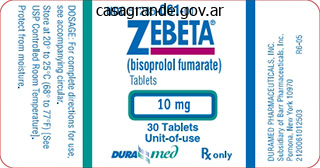
Zebeta dosages: 10 mg, 5 mg
Zebeta packs: 60 pills, 90 pills, 120 pills, 180 pills, 270 pills, 360 pills
Purchase zebeta on line amex
Examination Bitemporal hemianopia, which is attributable to a median lesion of the optic chiasma. The possible causes are as follows: -Pituitary tumour (endocrine signs precede the visible symptoms; the higher temporal fields are affected first after which the defect spreads down). Examination Central scotoma (allow the affected person to find the defect himself by moving the white hat pin in his personal visible field). Whether the defect crosses the vertical midline (defects as a end result of pathway harm have a pointy vertical edge at the midline). Proceed as follows: Examine for the following: Optic atrophy (primary and secondary). Poverty of motion: ask about drooling of saliva, difficulty in writing (micro-graphia), issue in delivering bed and change in voice (softness of voice). Elicit bradykinesia by asking the patient to contact her thumb with each finger in flip. The feet may scrape the ground in taking steps so the affected person trips easily (be prepared to forestall the affected person from falling when analyzing the gait). Inordinate difficulty in carrying out some simultaneous or sequential motor acts. Tremor is intermittent (can usually be caused by getting the subject to count backwards with the eyes closed and hands dangling over the armrests of the seat). Jaw tremor is uncommon however is most distressing; the enamel might pound together till they become unbearably painful. Anoxic brain damage corresponding to cardiac arrest, publicity to manganese and carbon monoxide. Lewy bodies, that are eosinophilic cytoplasmic inclusions in neurons con-sisting of aggregates of regular filaments. Spasticity of the clasp-knife type is characterized by increased tone which is maximal firstly of movement and all of a sudden decreases as passive move-ment is continued. It occurs chiefly within the flexors of the higher limb and extensors of the decrease limb (antigravity muscles). Gegenhalten, or paratonia, is where the elevated muscle tone varies and turns into worse the more the patient tries to relax. Symptomatic therapy: When tremor is the main problem - anticholinergic medicine such as trihexyphenidyl, benzatropine, biperiden, cycrimine, procyclidine, phenoxene, orphenadrine. When bradykinesia is the principle problem - [-dopa with a decarboxylase inhibitor similar to carbidopa or benserazide. Other medication embrace amantadine and synthetic dopamine agonists (bromocriptine, pergolide). In the elderly, L-dopa is the primary line of remedy because it has the best therapeutic index. When all patients randomly assigned to ropinirole were compared with those randomly assigned to levodopa, the danger of dyskinesia was lower by an element of almost three in the ropiimolc group. The overall incidence of dyskinesia at 5 years was 20% in the ropinirole group compared to 45% in the levodopa group. The purpose why the early use of ropinirole decreased the risk of dyskinesia stays unclear. At least 4 types of receptors have been reported: D1 and D2 are the two main families of dopamine receptors. For neurotransmission to occur, a posh con-sisting of a dopamine receptor and G protein (guanine nucleotide-binding protein) must be fashioned. Alteration of the second messenger results in a cascade of events that finally determines the transfer of information between nerve cells. Bromocriptine, pergolide and lisuride all stimulate D2 receptors, whereas bromocriptine and lisuride are D1 receptor antagonists and pergolide is a D1 receptor agonist. Animal experiments have advised that fetaldopaminergic neurons can survive transplantation and restore neurological operate. Thalamotomy used to be the principle treatment until 1950, however with the introduction of levodopa it became much less well-liked. It is unsuitable for bilateral tremor as bilateral thalamotomy tends to trigger impairment of speech. Deep-brain stimulation of the globus pallidus and subthalamic nucleus might lead to striking improvements in parkinsonism and dyskinesia, leading to giant reductions of levodopa dose and thus improvements in levodopa-induced dyskinesias (Lancet 1995; 345: 91-5). Unilateral posteroventral medial pallidotomy - ameliorates contralateral parkinsonian signs and medication-related dyskinesia and is sustained for up to 5 1/2, years.
10 mg zebeta amex
Proceed as follows: Tell the examiner that you just would like to look for: Postural hypotension, the hallmark of this condition (due to autonomic failure). Olivopontocerebellar atrophy: mixture of extrapyramidal manifestations and cerebellar ataxia. In 1960, Shy and Drager described changes within the brainstem and ganglia; sub-sequently, loss of neurons has been proven within the autonomic nervous system and in the cells of the intermediolateral column of the spinal cord. Positron emission tomo-graphy reveals decreased uptake of dopamine in the putamen and caudate lobe. Standing up (orthostatic hypotension, a trademark of this condition), food and train. Treatment is symptomatic and supportive for hypotension and neurological deficits. Symptoms of postural hypotension may be ameliorated by antigravity stockings and fluorohydrocortisone. Bradbury and Eggleston in 1925 first described the combination of postural hypotension, incontinence, impotence and abnormality of sweating (anhidrosis). Tell the examiner that in a male patient you want to take a historical past of impo-tence and look at the neurological system and backbone. Spinal or spastic bladder the bladder is small and spastic and holds less than 250 ml. It is seen in lesions of the spinal cord secondary to trauma, a number of sclerosis, and spinal cord tumour (upper motor neuron lesion). Evacuation could also be incomplete unless the bladder is massaged by stress within the suprapubic region. This results in retention of enormous quantities of urine, incontinence with dribbling, and a excessive volume of residual urine which may be voided by considerable straining. The uninhibited bladder this occurs with lesions affecting the second gyrus of the frontal lobe. Patients have urgency regardless of low bladder volumes and have sudden uncontrolled evacuation. The sympathetic system promotes urinary storage by growing urethral resistance and miserable detrusor contractions. A cortical illustration of the bladder is current within the paracentral lobule, stimulation of which may evoke bladder contractions. It may play a part in initiating voluntary contractions and in stopping micturition by initiating contrac-tion of the external sphincter. Cystometry, sphincter electromyography, urofowmetry with measurement and recording of urinary circulate, urethral stress profiles, and electrophysiological tests of bladder wall innervation. Urinary continence is dependent on a compliant reservoir (the bladder) and sphinc-teric efficiency which depends on its two parts: the involuntary smooth muscle of the bladder neck and the voluntary skeletal muscle of the external sphincter. Urinary incontinence happens when urine leaks involuntarily and is of five varieties: Total incontinence: the affected person loses urine at all times and in all positions. Stress incontinence: happens when there is an increase in intra-abdominal pressure (on coughing, sneezing, lifting, exercising). Urge incontinence: loss of urine preceded by a strong, sudden urge to void urine. Overflow incontinence occurs in continual urinary retention from a chronically distended bladder. Examine the patient from the foot finish of the bed and comment as follows: Whether the patient is breathless at relaxation. Percussion: percuss over supraclavicular areas, clavicles, higher, middle and lower chest on each side. Auscultation: Over supraclavicular areas, upper, middle and lower chest on each side -comment on breath sounds (whether vesicular or bronchial) and on adventitious sounds (wheeze, crackles or pleural rub). It is essential to time the crackles to confirm whether or not they happen in early, mid or late inspiration.
Diseases
- Boylan Dew Greco syndrome
- Periventricular leukomalacia
- Hartnup disease
- Pellagra like syndrome
- Acrofacial dysostosis Rodriguez type
- Hyperparathyroidism, neonatal severe primary
- Juvenile gastrointestinal polyposis
- Braddock Jones Superneau syndrome
Purchase 10mg zebeta with mastercard
There is a bent to accumulate within the reticuloendothelial cells of liver, spleen, and bone marrow, and in bone, dentine, and enamel (of unerupted teeth). The major route of excretion is the kidney, although a small amount is excreted by means of bile into the intestines from the place a part of it enters the enterohepatic cycle. The same applies to children of mothers who had acquired the drug during pregnancy. The interval of greatest hazard is from mid-pregnancy to 6 months of postnatal interval for deciduous enamel, and from a quantity of months to 5 to 8 years of age for permanent tooth. Tetracyclines additionally get deposited within the skeleton throughout gestation and childhood leading to despair of bone progress. Administration of tetracyclines to infants and aged sufferers could cause increased intracranial pressure (pseu dotumour cerebri). Hypersensitivity reactions together with skin rash, angioedema and anaphylaxis have been reported in delicate individuals. Minocycline generally produces vestibular toxicity manifested by vertigo, ataxia, nausea, and vomiting. A lupus-like syndrome, consisting of fevers, fatigue, and diffuse arthralgias, has additionally been reported during longterm minocycline remedy for treatment of zits. Gastro-intestinal distress is frequent, manifested by nausea, vomiting, epigastric ache, and sometimes diarrhoea. Pancreatitis, characterised by moderate to severe epigastric ache with elevated serum amylase and lipase levels, has been reported with minocycline therapy. Hepatic damage results from massive doses, and is characterised by jaundice, azotaemia, acidosis, and shock. Autoimmune hepatitis and fulminant hepatic failure, requiring liver transplantation, have been associated with long-term minocycline therapy. Ingestion of outdated or degraded tetracycline can outcome in the development of a variant of Fanconi syndrome characterised by vomiting, polydipsia, polyuria, proteinuria, acidosis, glycosuria, and aminoaciduria. Patients administered tetracyclines (especially doxycycline and demeclocycline) should avoid exposure to sunlight, or else photosensitivity reactions might happen in the skin, as also onycholysis and pigmentation of nails. Skin hyperpigmentation consisting of either focal blue-grey pigmentation at sites of prior cutaneous irritation or regular skin of the legs, or diffuse dark-grey discolouration of sun-exposed areas has been reported. Hepatotoxicity, pancreatitis, and renal failure might occur in pregnant girls following ingestion of tetracyclines during pregnancy. Maternal ingestion of tetracyclines throughout pregnancy, significantly in the course of the first trimester, could trigger varied congenital defects, including cardiovascular defects, oral clefts, polydactyly, hypospadias, limb hypoplasias and inguinal hernias. Intravenous administration of tetracyclines can lead to extreme thrombophlebitis. Long-term therapy with tetracyclines is related to leukocytosis, atypical lymphocytes, toxic granulation of granulocytes and thrombocytopenic purpura. Renal and hepatic monitoring steps must be instituted when extended use of enormous doses of tetracyclines has occurred. Chloramphenicol Chloramphenicol is a by-product of dichloroacetic acid, and was first isolated from Streptomyces venezuelae in 1947. Section 9 Uses Though chloramphenicol is probably certainly one of the "broad spectrum" antibiotics, its severe antagonistic results restricts its use just for sure cases of meningitis, typhus, and typhoid fever, in addition to Rocky Mountain noticed fever. Toxicokinetics Chloramphenicol is rapidly absorbed orally, and peak plasma concentrations are achieved inside three hours. The main route of elimination is by hepatic metabolism to the inactive glucuronide which is excreted within the urine by filtration and secretion. Chloramphenicol inhibits the 50s ribosomal subunit and protein synthesis in quickly proliferating cells. Inhibition of mitochondrial enzymes, oxidative phosphorylation, and mitochondrial biogenesis, all contribute to the development of metabolic acidosis produced by this drug in overdose. Bone marrow suppression results from ultrastructural microsomal modifications induced by chloramphenicol, resulting in the decreased production of important proteins and enzymes. Following large overdoses (doses exceeding a hundred mg/kg/dose, or single doses of 10 gm or more), remark in a medical facility for a minimal of 12 hours after the event is necessary, since manifestations may start only 5 to 12 hours following ingestion. For optic neuritis, with or without peripheral neuritis: administration of vitamins B6 and B12 has been beneficial.
Cheap zebeta american express
Much of the morbidity associated with untreated or undertreated allergic rhinitis could be prevented with correct diagnosis and administration. Anaphylactic and anaphylactoid reactions are mentioned as a single entity on this chapter. Cutaneous manifestations in anaphylaxis are commonest, with respiratory signs next most frequent. Death from anaphylaxis outcomes from cardiovascular collapse, bronchospasm, or higher airway edema causing airway obstruction. It is estimated that up to 1000 fatalities brought on by anaphylaxis happen yearly in the United States. In-hospital anaphylaxis complicates roughly considered one of each 5000 admissions, and anaphylaxis occurs more regularly in neighborhood than in well being care settings. Anaphylactic reactions are triggered by the cross-linking of the high-affinity IgE receptor by receptor-bound IgE that recognizes antigens similar to meals, drug, or insect venom. Complement protein anaphylatoxins similar to C3a and C5a can even set off anaphylaxis, and nonsteroidal anti-inflammatory brokers can set off anaphylaxis by altering arachidonic acid metabolism. These mediators directly contribute to elevated airway resistance, fall in Po2, and vasodilation with hypotension seen during anaphylaxis. Exercise-induced anaphylaxis occurs throughout or instantly after physical train and infrequently after consuming a meal. Often, target meals can be tolerated without anaphylaxis in the absence of exercise, and exercise may be tolerated with out ingestion of these foods. If specific meals are ingested adopted by exercise, however, anaphylaxis can occur. A subset of patients with exercise-induced anaphylaxis can develop anaphylaxis when exercising earlier than or after ingestion of any meals, not solely a selected meals. Two or extra of the following occur quickly (minutes to hours) after publicity of a possible allergen: involvement of the pores and skin, respiratory compromise, reduced blood stress, or persistent gastrointestinal symptoms. Reduced blood stress occurs after exposure to a identified allergen for the specific affected person; for infants and youngsters, decreased age-specific systolic blood strain or a higher than 30% decrease from baseline; for adults, systolic blood strain of less than ninety mm Hg or higher than a 30% decrease from baseline. From 5% to 20% of patients who Measurement of serum tryptase may be helpful in confirming the diagnosis of anaphylaxis. If serum specimens may be obtained between 1 and 6 hours after the event, an elevated serum tryptase level in contrast with a baseline stage obtained when the patient is asymptomatic can verify that signs were attributable to an anaphylaxis. An elevated serum histamine degree obtained inside 1 hour of the event also can recommend anaphylaxis. Diagnostic testing, if attainable, is crucial in identifying the triggering antigen. This could additionally be done with cutaneous or serum radioallergosorbent testing overseen by an allergy specialist. Often, an in depth historical past that reviews over-the-counter drugs, ingested meals and medicines, insect stings, and bodily actions before the occasion is the best test. Diagnostic skin testing ought to be delayed for no much less than 6 weeks after the occasion to get hold of an accurate skin check. The airway may be secured by intubation or emergent cricothyroidotomy if angioedema from anaphylaxis results in airway compromise. Vital indicators should be monitored, and Trendelenburg positioning and oxygen should be used if needed. Patients must be kept in the supine position, because deaths have occurred when transferring a affected person within the midst of an anaphylactic event from the supine to the upright position. The affected person must be immediately transported to a facility experienced in managing anaphylaxis. Epinephrine is the drug of alternative within the remedy of anaphylaxis and must be administered instantly on analysis. Itramuscular administration in the lateral thigh is the really helpful website of supply. Other vasopressor medications similar to dopamine, norepinephrine, or phenylephrine have additionally been used at the facet of colloids or crystalloids for persistent hypotension.
Buy generic zebeta online
Common unwanted effects of disopyramide embody anticholinergic effects corresponding to dry mouth, urinary retention, and blurred imaginative and prescient. In newonset atrial fibrillation, the clinician ought to try to restore regular sinus rhythm with direct current cardioversion, antiarrhythmic brokers, or each. Atrial fibrillation ablation or a maze procedure may be considered for these with refractory, extremely symptomatic atrial fibrillation. Pre- and postmyectomy echocardiography photographs show a marked reduction in septal thickness after myectomy. Abnormalities of the mitral valve, corresponding to redundancy of the anterior or posterior mitral valve leaflet, could predispose to systolic anterior motion of the mitral valve. If a patient stays symptomatic despite optimum medical remedy and has a resting or provocable gradient of 50 mm Hg or greater, septal myectomy must be considered. In distinction, we usually suggest continued aggressive medical management for subjects with gradients above 50 mm Hg if they remain asymptomatic or have only mild signs. One exception is younger, in any other case healthy topics with gradients higher than 75 mm Hg. The low operative danger of those subjects tilts the balance in favor of earlier intervention. In one examine from the Cleveland Clinic of 323 consecutive myectomy subjects from 1994 to 2004, topics who underwent myectomy had 0% in-hospital mortality. The risk that a myectomy patient would require a permanent pacemaker after myectomy is dependent upon the well being of the conduction system. Patients at highest risk for requiring a permanent pacemaker are those with preexisting right bundle branch block, as a outcome of left bundle department block occurs in more than 90% of sufferers after myectomy. Long-term isolated myectomy has had wonderful outcomes, with survival charges of 93% to 96% at 5 years and 83% to 87% at 10 years. Concomitant open coronary heart procedures on the time of myectomy are related to greater long-term mortality rates. Percutaneous Alcohol Septal Ablation Alcohol ablation was first reported in 1995, and its recognition subsequently surged. By 2000, more than 3000 alcohol ablations had been performed, more than the number of myectomies carried out over 40 years. At the Cleveland Clinic, most alcohol ablations have been performed on older or suboptimal surgical candidates, or both. A balloon is inflated in the proximal septal perforator, and alcohol is then injected into the septal artery by way of the distal port of the balloon. The aim is to create a controlled myocardial infarction of the proximal septum, leading to necrosis and shrinkage of the septum and thus a lower in the left ventricular outflow tract obstruction. Diagnostic coronary angiography is first carried out to assess whether septal ablation is possible, based on the vessel size and area of myocardium subtended by the septal perforators. First, a brief pacing wire is positioned in the proper ventricle to provide protection against full coronary heart block, which can happen throughout ablation. Next, by way of a guide catheter, a coronary guidewire is directed into the first major septal perforator (or the perforator that provides the proximal septum) of the left anterior descending artery. Rarely, the most important septal perforator arises off a diagonal branch of the left anterior descending artery or left circumflex artery. Myocardial contrast echocardiography is performed by injecting distinction through the distal lumen of the coronary balloon into the septal perforator to visualize the dimensions and placement of myocardium provided by the chosen septal perforator. This contrast injection additionally verifies that no leakage has occurred proximal to the inflated balloon in the septal perforator. Any leakage could be disastrous, because it might result in alcohol flowing antegrade into the left anterior descending artery, inflicting a myocardial infarction. Alcohol acts as a poisonous agent to the coronary artery and surrounding myocardium, leading to a controlled myocardial infarction of the cardiac muscle equipped by the septal perforator. After alcohol ablation, the patient is noticed in the cardiac intensive care unit for two days. Complications of alcohol ablation include proper bundle branch block or complete heart block, anterior myocardial infarction from an incomplete balloon seal within the septal perforator, ventricular tachycardia or fibrillation, and pericarditis. The dangers of alcohol ablation embody a 2% to 4% procedural mortality rate and a 9% to 27% incidence of patients requiring permanent pacemakers.
Syndromes
- Shortness of breath
- DO NOT hesitate to seek emergency medical treatment.
- Repeated pneumonias
- Low-dose beta-blockers
- Meprobamate (Equanil)
- Does your sleep schedule change a lot on weekends?
- Complete blood count
- You will also learn exercises to keep blood flowing, and coughing/deep breathing techniques.
- Mouth or throat ulcers
- Another type, calcium phosphate is less common.
Cheap zebeta line
Cases of patients growing sequelae similar to persona adjustments, paranoid psychosis, and memory deficits have additionally been reported. Abnormal thyroid perform tests have been reported following continual cyanide exposure in the occupational setting. Chronic, low-level exposure might end in any of the following- � Tobacco amblyopia: Progressive loss of visible perform seen virtually solely in heavy smokers. Cessation of smoking and administration of hydroxocobalamin reverses the visual impairment in some individuals. This tuber incorporates two cyanogens -linamarin and lotaustralin which may be removed only by correct fermentation methods. Symptoms include peripheral sensory neuropathy, optic atrophy, ataxia, deafness, glossitis, stomatitis, and scrotal dermatitis. A associated condition ensuing from persistent consumption of improperly processed bitter cassava is "Konzo" which produces spastic paraparesis. Interpret: Greenish-blue colour indicates cyanide, whereas purplish color indicates salicylates. Add enough aqueous hydrochloric acid (100 ml/L) to dissolve the ferrous hydroxide precipitate. Quantitative assays: microdiffusion methods using the Conway cell usually require 2 to three hours (p-Nitrobenzaldehyde/o-dinitrobenzene method), but a modification of the procedure (pyridine/barbituric acid method) permits a semiquantitative reading after 10 minutes of diffusion which could be carried out in emergency conditions. Serum cyanide level: that is confirmatory, however tough to accomplish in practice. Cyanide and thiocyanate levels can additionally be measured in timed urine collections which can yield helpful data on cyanide clearance. Fundoscopic examination: retinal arteries and veins that appear equally pink on fundoscopic examination is suggestive of cyanide poisoning. Ingestion-stomach wash (preferably with 5% sodium thiosulfate solution), activated charcoal, and cathartics, after antidotal therapy has been instituted. Absorption of cyanide is speedy and charcoal might only be helpful if administered instantly after ingestion. However, haemodialysis as adjunct treatment to supportive care, intravenous sodium nitrite, and sodium thiosulfate has been reported within the successful administration of some patients with cyanide toxicity. Charcoal haemoperfusion as adjunct treatment to supportive care, intravenous sodium nitrite, and sodium thiosulfate has additionally been reported in the successful management of a few sufferers. The 3-step Eli Lilly cyanide kit approach- � First step: Amyl nitrite (one perle of 0. A disadvantage to this technique of drug delivery is the increased risk of amyl nitrite toxicity. Further studies to determine the optimal secure dose with these strategies are suggested. It has been advised to dilute the sodium nitrite dose in 50�100 ml of normal saline, start the infusion slowly, and enhance the infusion price to as speedy as attainable without reducing blood stress. It has been instructed that a steady infusion of sodium thiosulfate be given after the initial bolus to keep excessive thiosulfate ranges. If large quantities of sodium thiosulfate are required, haemodialysis may be necessary to keep a physiologic serum sodium stage. There are very few instances reported where steady infusion has been tried, but it could be thought-about if deterioration happens following a bolus dose. Amyl nitrite perles are supposed to be a temporising measure till sodium nitrite may be administered intravenously. Amyl nitrite perles must be used when intravenous access is delayed or not possible. If vascular entry is out there and the affected person is severely poisoned, amyl nitrite may be omitted and intravenous sodium nitrite and sodium thiosulfate should be administered. Sweden has however deleted it from therapy guidelines for cyanide poisoning since 1990. It is unfortunately related to serious adverse results including hypotension, cardiac arrhythmias, decreased cerebral blood circulate, and angioedema. Category 1, a class intended for disorders in which the efficacy of hyperbaric oxygen has been established in intensive medical trials. The placement of cyanide poisoning in Category 1 stands in distinction to the existing literature, � which indicates that the role of hyperbaric oxygen as an adjunct to the chemical antidote therapy of the cyanide poisoned patient has not been clearly established.
Best buy zebeta
Myalgia, hepatic function impairment, headache, peripheral neuropathy, insomnia, behavioural adjustments, extrapyramidal symptoms, hyperkalaemia, flatulence, dyspepsia, diarrhoea, rash, pulmonary fibrosis, acute renal failure, and rhabdomyolysis. The manufacturer recommends slit-lamp examination as a precaution, earlier than or shortly after starting treatment with lovastatin, and yearly thereafter. Histologic examinations of the skeletal muscle confirmed myopathic modifications, corresponding to atrophy and muscle fibre necrosis. In August, 2001, Bayer Pharmaceutical Division introduced a voluntary withdrawal of cerivastatin (Baycol ) from the market as a outcome of several stories of fatal rhabdomyolysis following cerivastatin therapy. Elevated liver enzyme ranges, progressing to medical hepatitis, have been reported following lovastatin remedy. Minor and sporadic elevations of liver enzymes developed throughout scientific trials with atorvastatin. Case reports counsel that these agents could cause thrombocytopenia and haemolytic anaemia following short-term therapeutic dosing. Ingestion of as a lot as 6 grams of lovastatin has been reported without particular results or sequelae. All of them are absorbed nicely orally, are generally extensively protein-bound, and excreted primarily in the bile. Atorvastatin, cerivastatin, 328 Drug Interactions Adverse and Toxic (Clinical) Features 1. Anorexia, bloating, stomach discomfort, vomiting, flatulence, perianal pruritis, and constipation. Mild will increase in serum calcium and reduces in serum phosphorus and 25-hydroxy-vitamin D ranges have been reported in children on long-term therapy. Headache, chest ache, angina, tachycardia, and shortness of breath have been reported occasionally throughout therapeutic use. Since colestipol hydrochloride is an anion change resin, it may have a robust affinity for anions other than the bile acids. It is recommended by the manufacturer that patients ought to take other drugs one hour earlier than or 4 hours after colestipol to stop absorption issues of concomitant remedy. Colestipol can interfere with normal fats absorption and stop the absorption of some fats soluble vitamins corresponding to vitamin K. Cardiovascular Poisons Decreased plasma ranges may occur if antacids or colestipol are given concurrently. These medication are contraindicated in being pregnant since congenital anomalies may occur. Pre-hospital decontamination is usually not needed except coingestants are involved. In minimal to reasonable ingestions, elevated fluid consumption, fibre, and a stool softener ought to be instituted. Inhibition of the return of bile acids to the liver results in a rise in conversion of cholesterol to bile acids. Clofibrate additionally decreases serum levels of cholesterol, primarily the low-density lipoprotein fraction (Sf zero to 20). Co-administration of clofibrate with phenytoin may trigger a rise in phenytoin serum levels because of displacement of phenytoin from its protein binding website. An increased hypoglycaemic impact has been reported following concurrent administration of clofibrate and tolbutamide. Ciprofibrate is being investigated as a lipid regulating drug with actions on plasma lipids much like those of bezafibrate. Parameters that may decrease-fibrinogen, gammaglutamyl transpeptidase, serum alkaline phosphatase. Gastric decontamination might be often not essential and must be thought-about only if a quantity of times the daily therapeutic dose was ingested. Muscular syndrome could additionally be dose-dependant; essentially the most frequent impact is myalgia, with probably the most commonly affected muscular tissues being these of the lower extremities. Nausea, vomiting, constipation, dyspepsia, diarrhoea, and flatulence occur transiently in approximately 10% of sufferers. Epigastric pain has been reported as a frequent aspect effect, and cholelithiasis is increased.
Discount 2.5mg zebeta with mastercard
Chest X-ray findings in sufferers with amiodarone-induced pulmonary toxicity are nonspecific, together with areas of consolidation, infiltrates, and interstitial illness. Beta-adrenergic agonists corresponding to isoproterenol or ephedrine may be helpful in circumstances of sinus arrest. Adenosine (9-beta-D-ribofuranosyladenine) is a nucleotide found in all cells, and is released from myocardial cells under varied physiological and pathological situations. As an intermediate metabolite in several biochemical pathways, adenosine contributes to the regulation of numerous physiologic processes, together with platelet Section 6 operate, coronary and systemic vascular tone, and lipolysis in adipocytes. Adenosine, an endogenous coronary vasodilator, is used in a steady infusion (0. Adenosine causes more vasodilation in regular coronary arteries, leading to increased thallium uptake in regular myocardium versus ischaemic areas. Adenosine acts by reducing spontaneous depolarisation in the sinus node and conduction velocity in the A-V node. Its direct negative chronotropic and dromotropic properties are the basis for its broad therapeutic software in patients with supraventricular tachycardia. Total clearance from plasma occurs in less than 30 seconds following intravenous administration. Adenosine is rapidly cleared from the plasma by cellular uptakes, particularly by erythrocytes, vascular endothelial cells, and cardiomyocytes. Within cells, adenosine is quickly degraded to inosine by adenosine deaminase and subsequently to hypoxanthine. Cutaneous flushing, dyspnoea, chest ache, nausea, vomiting, vertigo, headache, hypotension, and proarrhythmias. Occasionally there may be minimal cardiac antagonistic effects including atrial fibrillation, atrial flutter, bradycardia, and angina-like chest pain at doses as excessive as 23 milligrams. It is believed that adenosine can produce bronchoconstriction by enhancing IgE-dependant launch of pre-formed mediators from mast cells. Until additional knowledge can be found, adenosine must be used with caution in asthmatic patients. Adenosine triphosphate: May be associated with a better incidence of opposed results than adenosine. Noncardiac opposed results include flushing, malaise, hyperpnoea, headaches, retching, vomiting, seizures (rare), and coughing. Significantly lower doses of adenosine should be administered to sufferers receiving dipyridamole. Adenosine is in all probability not effective in sufferers receiving methylxanthines; methylxanthines are aggressive antagonists of adenosine and can fully block the electrophysiologic results of the drug. If adenosine is used to deal with patients with toxic concentrations of calcium channel blockers, extended bradycardia may happen. Mechanisms of adenosine-mediated actions on cellular and clinical cardiac electrophysiology. The length of electrophysiologic and clinical results with adenosine is extraordinarily brief, normally lower than 10 seconds, due to speedy cellular uptake and metabolism. The incidence of opposed effects with adenosine triphosphate could be decreased with using smaller preliminary doses (10 mg). The frequent name of this plant is foxglove, and it grows nicely in the hilly regions of Darjeeling, Nilgiris, and Kashmir. It is a biennial or perennial herb belonging to family Scrophulariaceae, growing upto 1 to 1. There is a associated species, Digitalis lanata, which can also be rich in cardiac glycosides. The following discussion will be mainly with reference to the digitalis glycosides digoxin and digitoxin, that are the most widely used cardiac glycosides. Cardiac Glycosides Diuretics Vasodilators Beta Adrenergic Receptor and Dopaminergic Receptor Agonists 6. Uses Treatment of delicate to average coronary heart failure Control of ventricular response fee in patients with persistent atrial fibrillation. Digoxin increases left ventricular ejection fraction leading to enchancment of coronary heart failure symptoms.
Cheap zebeta 2.5mg mastercard
A good predictor of later hepatic encephalopathy additionally features a whole Gc-globulin stage lower than a hundred and twenty mg/L on day 2 following paracetamol overdose. This worth was primarily based on a potential longitudinal study including 84 patients with acute paracetamol overdose. Some investigators have discovered that an early arterial lactate 4 hours after transfer (median of forty three hours after ingestion) above 3. An arterial lactate focus 12 hours after switch and after enough fluid resuscitation (guided by invasive haemodynamic monitoring) above 3. Forced diuresis, haemodialysis, and charcoal haemoperfusion are of little value in stopping paracetamol induced hepatotoxicity. Albumin dialysis allowed time for hepatic regeneration throughout standard supportive care on this case. Continuous haemofiltration: this might be preferable to intermittent haemodialysis in sufferers with paracetamolinduced hepatic and renal failure. Use of intermittent haemodialysis is related to increases in intracranial strain in these sufferers because of each cytotoxic and vasogenic cerebral oedema. Extracorporeal sorbent-based devices: Paracetamolinduced hepatitis or hepatic failure have been handled at 16 to sixty eight hours after an overdose for four to 6 hours with the Liver Dialysis System (a single-access haemodiab- sorption system for therapy of significant drug overdose, and for remedy of hepatic encephalopathy). If paracetamol levels have been still measurable in plasma, remedy was repeated 24 or forty eight hours later. In this group, liver enzymes normalised 24 hours after the final treatment and no patient required a liver transplant. Cardiac findings in fatal overdoses have included subendocardial haemorrhages, fatty degeneration, and focal necrosis. While the situation is at current not as unhealthy in India, there are alarming indications of rising incidence. Accidental poisoning most often results from inadvertent therapeutic overdose either as an acute or as a continual phenomenon. A few cases outcome from hypersensitivity reactions which (though rare) might generally produce critical manifestations ranging from dermal to respiratory to anaphylactoid reactions. Propionic acids-benoxaprofen, carprofen, fenbufen, fenoprofen, flurbiprofen, ibuprofen, ketoprofen, naproxen, oxaprozin, pirprofen, suprofen, tiaprofenic acid. Heterocyclic acetic acids-etodolac, indomethacin, ketorolac, sulindac, tolmetin, zomepirac. Regular monitoring of serum creatinine in sufferers receiving such drug remedy is advisable. It is postulated that the excretion of phenylbutazone, like salicylate, may be enhanced in an alkaline urine. However, alkaline diuresis is of questionable worth since pyrazoles are extensively metabolised, and only one to 5% of the drug is eradicated unchanged by the kidneys. Plasmapheresis is claimed to be beneficial in severe poisoning, and has been tried efficiently in a case of phenylbutazone overdose. Pyrazolones Phenylbutazone was introduced in 1949, adopted soon thereafter by its metabolite oxyphenbutazone. Both are potent antiinflammatory medication, but are associated with vital adverse results, and hence have been withdrawn from routine use in several international locations. Their use ought to be restricted to acute gout and acute exacerbations of rheumatoid arthritis and ankylosing spondylitis. Related drugs embody aminopyrine, antipyrine, amidopyrine, azapropazone, dipyrone, noramidoprine, phenazone, and sulfinpyrazone. Miscellaneous Drugs and Poisons Mode of Action Phenylbutazone interferes with prostaglandin synthesis via inhibition of the cyclo-oxygenase pathway. Propionic Acids the first member of this group to be launched into pharmacotherapeutics was ibuprofen in 1969. They are broadly used today in the reduction of musculoskeletal problems, fractures, sprains, and dysmenorrhoea. Examples embrace benoxaprofen, carprofen, fenbufen, fenoprofen, flurbiprofen, ibuprofen, indoprofen, ketoprofen, ketorolac, loxoprofen, oxaprozin, pirprofen, suprofen, and tiaprofenic acid. Angioedema, hives, itching, rash, and swelling have been reported with therapeutic use. The assertion is as follows: If you drink 3 or extra alcoholic drinks daily, ask your doctor whether you want to take ibuprofen or other ache relievers/fever reducers. Isolated circumstances of thrombocytopenia, agranulocytosis, haemolysis, lymphopenia, and pancytopenia have been reported after therapeutic use of propionic acids.
2.5 mg zebeta sale
Large doses may cause water intoxication with convulsions (due to its antidiuretic effect). Other adverse results include initial hypotension, adopted often by hypertension. Clinical (Toxic) Features Routine use is related to vomiting, diarrhoea, and fever. High serum hepatic enzyme activity and coagulopathy in foetus (after maternal oxytocin overdose). They are relatively low-cost and secure, though occasionally severe opposed reactions can happen. Examples- Y Ionic monomers: diatrizoates, iothalamates, metrizoates, iodamide, ioxithalamate. Lymphography, lymphangiography: these agents are waterinsoluble with excessive radiodensity. Magnetic resonance imaging: Y Examples: � Gadolinium, manganese, and iron as the aminopolycarboxylate chelates and gadopentetic acid. Predisposing factors: � Cerebral or renal illness in patient over the age of 50 years. Y Categories of reaction: � Mild: nausea, vomiting, cough, headache, vertigo, itching,pallor,flushing,chills,sweats,rash(hives), nasalstuffiness,andswellingoffaceandeyes. Cardiovascular unwanted effects: Y Cardiac ischaemia with ache and arrhythmias, usually accompanied by dyspnoea. Neurological side effects: Headache (may be associated with intracerebral haemorrhage), amnesia, visual blurring, cortical blindness, encephalopathy, vertigo, and convulsions. Pulmonary unwanted facet effects: Non-cardiogenic pulmonary oedema is relatively commonly reported. Renal unwanted effects: There have been several stories of acute renal failure following injection of water soluble contrast media. Anaphylactoid reaction: Thromboembolicphenomena:Seriousthromboembolic events causing myocardial infarction and stroke have occurred throughout angiographic procedures with contrast media. Y Extra warning must be exercised when utilizing non-ionic contrast media in high-risk patients (elderly patients, patients with coagulation defects, etc. Cancer induction: Thorotrast, a contrast agent which incorporates 25% colloidal thorium dioxide has been related to malignancies. Precipitation of mumps: Iodide mumps has often been observed in sufferers who were administered iodinated distinction agents. Inadvertent administration of ionic distinction brokers such as Y diatrizoate or iodamine, instead of iopanidol, by the intrathForconvulsions: � Oxygen, 2 to 6 L/min. In the past, methiodal sodium was generally used for � Phenytoin, 15�18 mg/kg, infusion at 50 mg/min. Because of excessive incidence of neurotoxic Y adverse reactions, other compounds have been subsequently Forpulmonaryoedema: � Head elevation, rotating tourniquets. Overdose with iothalamate meglumine throughout excretory If unintended intrathecal injection of ionic distinction urography can lead to cardiopulmonary failure. Pulmonary unwanted effects: Y Patients with a history of radiocontrast medium-related Adverse Effects oedema should be given prophylactic corticosteroids. Accidental intrathecal administration of ionic distinction brokers have to be handled with applicable circulatory help, intrathecal lavage, and anticonvulsant remedy. To lower the incidence of unwanted side effects after myelography, the next have been advised: Y Head elevation for six hours after the examine. General recommendations: Y Patients with pre-existing renal impairment must be given 0. Y Pre-treatment with corticosteroids and antihistamines (with or without adrenaline), has been advised to minimise reactions to contrast agents. Maximum plasma concentrations are achieved in about one hour, with imply terminal half-life of 3 to 5 hours. This explains the color imaginative and prescient abnormalities encountered at high doses of the drug. The following had been tried with various levels of success: intracavernosal injection of vasoactive agents, transurethral delivery of prostaglandin E1, implantation of penile prosthesis, and venous or arterial surgical procedure.
References
- Kam M, Perl- Treves D, Caspi D, Addadi L. Antibodies against crystals. FASEB J 1992; 6:2608-13.
- Liu S, Manson JE, Stampfer MJ, et al. Whole grain consumption and risk of ischemic stroke in women: A prospective study. JAMA 2000;284:1534-40.
- Ng EK, Lam YH, Sung JJ, et al: Eradication of Helicobacter pylori prevents recurrence of ulcer after simple closure of duodenal ulcer perforation: Randomized controlled trial. Ann Surg 231:153, 2000.
- Henrik-Nielsen R, Lundbeck FA, Teglbjaerg PS, Ginnerup P, Hovind-Hougen K. Intestinal spirochetosis of the vermiform appendix. Gastroenterology 1985;88:971.
- Jaffe ES, Harris NL, Stein H, Vardiman JW, editors: Pathology and genetics of tumours of haematopoietic and lymphoid tissues, Lyon, France, 2001, IARC Press. 2.