


Richard James Redett, III, M.D.
- Interim Director, Plastic and Reconstructive Surgery
- Professor of Plastic and Reconstructive Surgery

https://www.hopkinsmedicine.org/profiles/results/directory/profile/0008095/richard-redett
Plavix dosages: 75 mg
Plavix packs: 30 pills, 60 pills, 90 pills, 120 pills, 180 pills, 270 pills, 360 pills
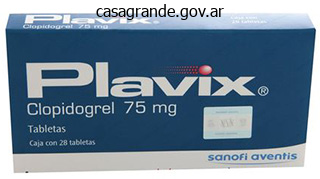
Generic plavix 75 mg with visa
Since it additionally binds active renin, the receptor is referred to as the (pro)renin receptor. When prorenin binds to the (pro)renin receptor, it undergoes a conformational change and turns into fully lively. The catalytic exercise of energetic renin also increases further when it binds to the receptor. Thus, elevated prorenin levels (as happen, for example, in diabetes mellitus) may produce a variety of antagonistic effects via each angiotensin-dependent and impartial pathways. Kallikreins Kallikreins are current in plasma and in a number of organs and tissues, including the kidneys, pancreas, intestine, sweat glands, and salivary glands. Plasma prekallikrein may be activated to kallikrein by trypsin, Hageman issue, and possibly kallikrein itself. In general, the biochemical properties of tissue kallikreins are completely different from these of plasma kallikreins. Kallikreins can convert prorenin to lively renin, however the physiologic significance of this action has not been established. Three kinins have been recognized in mammals: bradykinin, lysylbradykinin (also known as kallidin), and methionyllysylbradykinin. Bradykinin is launched by plasma kallikrein, lysylbradykinin by tissue kallikrein, and methionyllysylbradykinin by pepsin and pepsin-like enzymes. Bradykinin is the predominant kinin in plasma, whereas lysylbradykinin is the most important urinary form. In Hageman issue Trypsin Kallikrein + Plasma prekallikrein Plasma kallikrein this respect, kinins are roughly 10 times more potent on a molar basis than histamine. When injected intravenously, kinins produce a rapid but transient fall in blood stress that is because of their arteriolar vasodilator action. The speedy reversibility of the hypotensive response to kinins is due primarily to reflex will increase in coronary heart rate, myocardial contractility, and cardiac output. Since kinins have such marked results on smooth muscle, they might modulate the tone of salivary and pancreatic ducts, help regulate gastrointestinal motility, and act as native modulators of blood circulate. Kinins additionally affect the transepithelial transport of water, electrolytes, glucose, and amino acids, and will regulate the transport of those substances in the gastrointestinal tract and kidney. Finally, kallikreins could play a role within the physiologic activation of assorted prohormones, together with proinsulin and prorenin. Kinins are rapidly generated after tissue injury and play a pivotal role in the development and upkeep of those inflammatory processes. Considerable effort has been directed towards growing kinin receptor antagonists, since such medicine have considerable therapeutic potential as antiinflammatory and antinociceptive brokers. Competitive antagonists of both B1 and B2 receptors are available for research use. Examples of B1 receptor antagonists are the peptides [Leu8-desArg9]bradykinin and Lys[Leu8-des-Arg9]bradykinin. Icatibant has been proven to be effective within the therapy of hereditary angioedema, an autosomal dominant disorder characterised by recurrent episodes of bradykinin-mediated angioedema of the airways, gastrointestinal tract, extremities, and genitalia. Kinin synthesis may also be blocked with ecallantide, a newly developed recombinant plasma kallikrein inhibitor which, like the B2-receptor antagonist icatibant, is effective in the remedy of hereditary angioedema. Other Effects There is proof that bradykinin could play a beneficial, protecting position in certain cardiovascular diseases and ischemic stroke-induced brain harm. One exception is the B2 receptor that mediates contraction of venous smooth muscle; this appears to be most sensitive to lysbradykinin. Recent proof suggests the existence of two B2receptor subtypes, which have been termed B2A and B2B. Studies with knockout mice that lack functional B1 receptors recommend that these receptors take part within the inflammatory response and can also be essential in long-lasting kinin results similar to collagen synthesis and cell multiplication. Agonist binding to B2 receptors units in motion a number of signal transduction events, together with calcium mobilization, chloride transport, formation of nitric oxide, and activation of phospholipase C, phospholipase A2, and adenylyl cyclase. Kininase I, apparently synthesized in the liver, is a carboxypeptidase that releases the carboxyl terminal arginine residue.
Purchase cheap plavix
Yet, controversy exists concerning the interpretation of urinalysis and culture results. No mixture of urinary checks meets the gold commonplace of culture, but a number of checks may help predict sufferers in whom tradition might be optimistic. When all tests (or leukocyte esterase and nitrite tests) are unfavorable, the adverse predictive value approaches 100%. Hoberman and Wald proposed that only urine specimens with pyuria, as outlined by the "enhanced urinalysis," and those from children receiving antimicrobial therapy must be cultured, in order to cut back prices. Radiologic imaging can be utilized to (1) consider and localize the acute urinary infection, (2) detect renal injury from the acute infection, (3) establish genitourinary anatomy that increases the chance of future renal injury from an infection, and (4) consider changes in the urinary tract over time. It ought to be kept in thoughts that imaging studies are recommended provided that their findings could change clinical administration. The uptake defects could seem wedge-shaped in lateral or polar areas or scattered throughout the kidney. Assuming that obstructive lesions are present in 5% to 10% of kids and reflux occurs in 21% to 57%,11,70-72 early detection of these abnormalities merits full urinary tract imaging evaluation after the primary infection in young youngsters. If studies in the course of the acute infection reveal edema or hypoperfusion defects with normal collecting methods, a follow-up examine ought to be obtained to evaluate for renal scarring and development problems. After the acute episode is healed, the scans might present (1) a normal pattern, (2) typically diminished uptake and small kidney volume, (3) diminished uptake within the medial kidney, or (4) polar defects with diminished uptake within the renal poles. Children youthful than ninety days of age are extra likely to have their course of disease change rapidly due to their physiology and incompletely developed immune system. For this patient population, significantly those that are 30 days of age or youthful, consideration should be given to antimicrobial coverage of Listeria monocytogenes (perinatally acquired) and E. Third-generation cephalosporins, such as ceftriaxone, enable once-daily outpatient parenteral therapy. Usually, parenteral treatment is sustained for forty eight to 72 hours, until the kid is afebrile, clinically improving, and taking fluids. Antibiotic therapy can then be tailor-made based on bacterial sensitivities, and the patient can be switched to an acceptable oral antimicrobial agent that attains enough serum levels. Analysis has proven that no follow-up urinary tradition after 48 hours is required if the organisms are delicate to the antibiotic chosen. The newer oral cephalosporins have good gram-positive and gram-negative therapy spectrums with handy dosing schedules. With careful monitoring, limited quinolone usage has shown no cartilage-related toxicities. Certain medical situations have prompted more widespread, off-label use in youngsters. Local antibiotic susceptibility patterns should be consulted and up to date routinely. Treatment of Asymptomatic Bacteriuria Infections that are asymptomatic, as designated by Savage and colleagues,252 and are discovered solely on screening urinary tradition when a toddler is being examined for reasons unrelated to urinary an infection nonetheless symbolize either first infection or recurrent an infection and mark host susceptibility to bacteriuria. Antimicrobial Prophylaxis Because renal scarring and harm have been shown to occur only in the presence of an infection, the goal of antimicrobial prophylaxis is to sterilize the urine and prevent an infection. The perfect prophylactic agent should have low serum levels, high urinary levels, and minimal impact on the traditional fecal flora; must be nicely tolerated orally; and must be inexpensive. The potency of these antimicrobial brokers relies on the overall susceptibility of most fecal Enterobacteriaceae to these brokers at urinary levels. [newline]Because these agents are typically concentrated within the urine, the urinary drug levels should be a lot higher than the drug ranges discovered simultaneously in serum, intestine, or tissue. This attribute of the prophylactic antimicrobial brokers is more than likely dose-related, so that inappropriately excessive dosing for prophylaxis may be ineffective as a result of bacterial resistance shall be created. This accounts for irritating "breakthrough" infections that happen soon after the child begins taking prophylactic antimicrobial brokers or after treatment of other widespread infections similar to otitis media. The period of best threat for recurrent an infection is normally the primary few weeks after any full-dose therapy. Once urinary tract antimicrobial prophylaxis is initiated, the drug is often administered till the urinary tract abnormality for which prophylaxis is being given has resolved.
Plavix 75mg cheap
Comparison of multiple measurements obtained on successive imaging research and represented on a renal progress chart is essentially the most accurate technique for assessing the pattern of renal growth. Renal sizes that are reproducibly uneven or that fall outdoors the traditional range ought to be suspect, particularly if serial examinations fail to document an appropriate rate of growth. Although the renal measurements can differ with the affected person in several positions, the location and transducer angle from which the longest renal axis could be obtained are routinely influenced by components over which the examiner has little or no control, including interference by intestinal fuel and overlying dressings, tubes, wounds, and scars; abnormalities in the positions and axes of the kidneys; and spinal deformities. Patient hydration can even have an result on sonographic renal size, as can administration of diuretic medicines or intravenous distinction material. The medical relevance of the assessment of renal dimension and rate of renal growth is underscored by the potential diagnostic and prognostic implications of sonographic demonstration of nephromegaly or an abnormal acceleration in the rate of renal growth, or both, as indicators of compensatory renal hypertrophy. Demonstration that the absence of nephromegaly in neonates who have been born with multicystic dysplastic kidney is correlated with the presence of other urologic abnormalities. In some instances, catheterization and infusion of sterile saline or contrast materials could additionally be essential to present sufficient distention of the urinary bladder to allow a satisfactory examination. In the transverse plane, the traditional bladder is rhomboidal in shape, and its distended wall is thin and smooth. The bladder wall usually has a clean contour and measures as a lot as three mm in thickness when the bladder is well distended. Diffuse thickening of the bladder wall regularly evokes the possibility of bladder outlet or urethral obstruction or neurogenic dysfunction. In cystitis, the thickening is attributable to inflammatory infiltration and edema of the bladder wall. The bladder may be extra echogenic than regular, with elevated circulate to the bladder wall and perivesical tissues visible on Doppler imaging. Common causes of focal thickening of the bladder wall embody focal bacterial or viral cystitis, collapsed ureterocele, and postoperative thickening. Midline longitudinal (A) and transverse (B) views of the distended urinary bladder demonstrate the traditional rhomboidal form of the bladder, which is full of anechoic urine and has a clean and uniformly thin wall. Transverse (A) and longitudinal (B) sonographic images of the pelvis present that the bladder wall is markedly thickened diffusely and irregular, with mildly elevated echogenicity, according to inflammatory infiltration and edema. C, Power Doppler ultrasound picture reveals that the posterior bladder wall and adjoining perivesical tissues are also hyperemic. Rarely, kids with extreme cystitis current with dramatic nodular bladder wall thickening which, if focal or disproportionately extreme along the bladder base, may be mistaken for neoplasm. The parenchyma is thinned and diffusely echogenic with no identifiable corticomedullary differentiation, according to dysplasia. There is abnormally extended retention of the radiopharmaceutical in the left kidney after administration of diuretic, according to obstruction. A, Transverse duplex Doppler ultrasound picture of the bladder reveals the echogenic Deflux mound on the best side of the bladder base, with the ureteral jet issuing from the highest of the mound, confirming the proximity of the mound to the ureteral orifice. B, Steep left posterior oblique view of the identical bladder on a voiding cystourethrogram performed the same day shows the filling defect attributable to the Deflux mound (arrow). Awareness of the potential for occult renal disease has led to a dramatic improve in renal sonographic screening. The lumbosacral backbone, hips, and delicate tissues ought to be rigorously inspected for any proof of an underlying neuromuscular dysfunction or anomaly that may be associated with neurogenic bladder dysfunction. Similarly, the bowel fuel sample may yield essential information in regard to constipation, whether useful or neuropathic. Displacement of the bowel loops may be an necessary clue to the presence of a renal or retroperitoneal mass. Widening of the pubic symphysis is almost at all times current in youngsters with the epispadias-exstrophy complex and cloacal anomalies. The parenchyma of the kidney is diffusely echogenic with no corticomedullary differentiation. Additional oblique or lateral views and delayed photographs could be obtained as required. Serious allergic and different antagonistic reactions to intravenous contrast media are comparatively uncommon in kids, notably when non-ionic, low-osmolarity urographic distinction media are used. However, the need for bladder catheterization typically provokes considerable anxiousness.
Order plavix 75mg without a prescription
About 10% of blacks in the United States, Sardinians, non-Ashkenazi Jews, Greeks, EtiTurks, and Thais have a glucose-6-phosphate deficiency. Cephalexin at one quarter or less of the therapy dose per weight could then be a useful pediatric prophylactic agent. A significant enhance in bacterial resistance has been noticed to this drug over the previous decade. Antimicrobial brokers taken at a prophylactic dosage are normally successful in lowering the rate of infections during the period of prophylaxis. When the antimicrobial agent is stopped, there could additionally be an extended period of remission from an infection, but typically the child eventually returns to an increased fundamental susceptibility for urinary infections. However, the remainder (>60%) had no known infectious agents isolated from the urine. However, radiologic analysis must be thought of to rule out other causes of hematuria. After engraftment, the host immune response reacts to the virus within the urothelium, leading to mucosal injury and hemorrhage. Epididymitis is usually difficult to distinguish from different pediatric acute scrotal processes, particularly testicular torsion. Characteristics which may be distinctive to epididymitis include a history of a extra gradual onset, dysuria, and urethral discharge. As described by Keller and colleagues, predisposing elements for genitourinary candidiasis in neonates embrace antibiotic remedy (57%), prematurity (29%), intravenous catheters (24%), and parenteral alimentation (18%). Finally, immunosuppression, both iatrogenic or disease associated, has emerged as a significant risk factor for genitourinary fungal infections. In younger boys and infants, epididymitis is more likely to be associated to genitourinary abnormalities or hematogenous dissemination than in older boys. Hematogenous unfold to the epididymis is supported by studies by which Haemophilus influenzae kind b have been cultured from epididymal abscesses, concurrent with different sites of an infection corresponding to otitis media, whereas the urinalysis remains regular. Once the culture results and antimicrobial sensitivities are available, essentially the most specific agent that achieves sufficient tissue penetration must be administered. Hitchcock and coworkers described two instances of candidal bladder infections in sufferers with posterior urethral valves330; both patients had placement of suprapubic catheters that subsequently turned contaminated. Infections resolved after valve ablation, acceptable drug therapy, and catheter elimination. Deciding which lower urinary tract candidal infections to treat is both challenging and controversial. Patients with indwelling urinary catheters may be colonized and yet not often develop systemic infection. The final group, in particular, should be aggressively managed, as a end result of urinary candiduria is a reliable marker of disseminated an infection. Diagnosis can be made by urine tradition, although the colony count that defines important candiduria stays controversial. Fungusspecific urine cultures may be necessary in certain establishments to get hold of speciation and colony counts, as a outcome of these factors may alter therapy. Treatment of localized bladder infection begins with changing and, if possible, eradicating urinary catheters and discontinuing pointless antibacterial agents. Amphotericin bladder irrigation has been extensively used within the treatment of candidal cystitis332,333; however, dosage, size of therapy, and method of supply have various considerably. Controversy exists as to whether intermittent versus continuous irrigation with amphotericin B is most effective. The National Nosocomial Infection Surveillance noted a five-fold enhance in bloodstream infections. Candida was present in urine cultures in 58% of sufferers prior to candidemia,325 and it could serve as the source of blood infection in virtually one quarter of the circumstances. In disseminated disease, the kidney is the second most common site of infection after the lung. Candidal Infections of the Kidney the kidney is a common website of end-organ disease in disseminated candidiasis, with a selection of scientific manifestations including abscess (solitary or multiple), pyelonephritis, and fungal bezoar in the renal pelvis causing obstruction.
Generic plavix 75 mg amex
Timing may be began when the furosemide is given, or when its have an result on can be visualized on the exercise curve. The former has the drawback of disregarding particular person response time to the drug, and the latter is subjective, significantly in equivocal cases during which the precise amount of radiopharmaceutical is unclear. Mathematical variation includes linear extrapolation to determine the 50% level on development of a computerretrieved exponential best-fit curve. Most institutions report half-times of less than quarter-hour to be normal and more than 20 minutes as being "obstructed" (see previous discussion). Perfusion Pressure Flow Studies Whitaker first described perfusion pressure flow studies121 in 1973; this take a look at is often referred to as a "Whitaker take a look at. Similar to provocative renography, the small print are essential, and the casual operator would at greatest acquire unreliable outcomes and at worst might have a significant complication. Similar to provocative renography, the technique has been considerably refined to enhance its safety, practicality, and accuracy. Early within the evolving experience, Toguri and Fournier122 outlined general danger and error issues. Accuracy and safety demand control of muscle (skeletal and diaphragmatic) within the susceptible place. In children, general anesthesia is required, and the prone position requires endotracheal intubation. The chances of success are greatly enhanced by simultaneous use of ultrasound (to achieve anatomic place in the renal pelvis) and fluoroscopy (to confirm position), and greatly enhanced by physiologic and anatomic studies. Fung and coworkers123 confirmed that this uniform software of a single move price resulted in frequent false-positive exams, particularly in younger kids. Fung and coworkers123 proposed a a lot more physiologic problem based mostly on individual maximal urine output on the time of that exact test. There the serum osmolality and antidiuretic hormone excretion decide ultimate nephron urine circulate rate and osmolality. This check is more correct, is more physiologic, and requires only one cannula to be positioned within the renal pelvis. Fung and coworkers123 also were capable of prove the essential variable relationship between move fee infused into the renal pelvis either externally or internally (power demand) and ureteropelvic transport price (power delivery). Fung and coworkers123 additionally showed that rising flow rates above "individual" physiologic ranges increased intrapelvic pressures in all patients. It established that renal pelvic pressures lower than 15 cm H2O are low and physiologically safe, whereas pressures larger than 15 cm H2O progressively decreased renal diastolic blood move, confirming animal mannequin studies. External infusion over this price increases pelvic stress and reduces diastolic renal blood move. At low urine circulate rates (<1 mL/kg/hr), renal pelvic pressure stays regular even in severe hydronephrosis with major transport inefficiency (no previous surgery). In minimal hypoplastic adynamic phase, maximal ureteral Furosemide diuretic urine flow rates. Evaluation of pediatric hydronephrosis utilizing individualized strain circulate criteria. The accumulating system is sufficiently elastic, nonetheless, to accommodate the imbalance in flows, and renal pelvis strain stays low and protected, and renal blood flow, renal parenchymal volume, and renal perform are maintained. It offers us all the knowledge that we need to maximize the safety, selection, and success of administration technique in a single examination. The anatomy of aberrant vessels, secondary kinks, and adhesions is accurately recognized. The presence of related renal anomalies-horseshoe, duplex, and ectopic (fused or unfused) kidney-is detected. It supplies an correct check of anomalies such as ectopic ureterocele included in the differential diagnosis. The value of investigation is comparable to all different single checks and cheaper when multiple modalities are used.
Phytonadione (Vitamin K). Plavix.
- Dosing considerations for Vitamin K.
- Osteoporosis, heart disease, spider veins, bruises, scars, stretch marks, burns, swelling, and other conditions.
- Are there any interactions with medications?
- Treating and preventing vitamin K deficiency.
- Preventing certain bleeding or blood clotting problems.
- How does Vitamin K work?
- Are there safety concerns?
- What is Vitamin K?
Source: http://www.rxlist.com/script/main/art.asp?articlekey=96944
Order plavix 75 mg otc
These water-soluble ions are unable to freely diffuse throughout the lipid cell membrane in response to their electrical and focus gradients; they require aqueous channels (specific pore-forming proteins) for such diffusion. Individual channels are comparatively ion-specific, and the flux of ions by way of them is managed by "gates" (flexible portions of the peptide chains that make up the channel proteins). Each type of channel has its personal sort of gate (sodium, calcium, and some potassium channels are every thought to have two forms of gates). Similarly, calcium enters and potassium leaves the cell with every action potential. Therefore, in addition to ion channels, the cell must have mechanisms to maintain secure transmembrane ionic circumstances by establishing and sustaining ion gradients. This pump and different active ion carriers contribute not directly to the transmembrane potential by maintaining the gradients needed for diffusion by way of channels. Conductance is decided by the properties of the individual ion channel protein. The voltage term is the distinction between the precise membrane potential and the reversal potential for that ion (the membrane potential at which no current would move even when channels had been open). In truth, certain potassium channels ("inward rectifier" channels) are open in the resting cell, but little current flows by way of them because of this balance. The equilibrium, or reversal potential, for ions is decided by the Nernst equation: Eion = sixty one � log Ce Ci where Ce and Ci are the extracellular and intracellular concentrations, respectively, multiplied by their exercise coefficients. Thus, extracellular potassium focus and inward rectifier channel perform are the main factors determining the membrane potential of the resting cardiac cell. Conversely, the actual observed effects of hypokalemia embody prolonged action potential length, increased pacemaker rate, and increased pacemaker arrhythmogenesis. These effects of serum potassium on the guts in all probability contribute to the observed elevated sensitivity to potassium channel-blocking antiarrhythmic agents (quinidine or sotalol) throughout hypokalemia, eg, accentuated motion potential prolongation and tendency to cause torsades de pointes. This depolarization outcomes from a gradual improve of depolarizing present through special hyperpolarizationactivated ion channels (If, additionally called Ih) in pacemaker cells. The Active Cell Membrane In regular atrial, Purkinje, and ventricular cells, the action potential upstroke (phase 0) is dependent on sodium present. Transitions between resting, activated, and inactivated states are dependent on membrane potential and time. In addition, regions of the protein that confer specific behaviors, similar to voltage sensing, pore formation, and inactivation, at the moment are being identified. Final repolarization (phase 3) of the action potential outcomes from completion of sodium and calcium channel inactivation and the growth of potassium permeability, so that the membrane potential once again approaches the potassium equilibrium potential. Changes in refractoriness (determined by both altered recovery from inactivation or altered motion potential duration) could be essential in the genesis or suppression of sure arrhythmias. A temporary, sudden, depolarizing stimulus, whether attributable to a propagating motion potential or by an external electrode arrangement, causes the opening of enormous numbers of activation gates earlier than a significant variety of inactivation gates can close. Depolarization of the resting potential to ranges optimistic to -55 mV abolishes sodium currents, since all sodium channels are inactivated. However, such severely depolarized cells have been discovered to help special motion potentials beneath circumstances that increase calcium permeability or lower potassium permeability. Important consequences of the reduction in peak sodium permeability embrace decreased most upstroke Many components can precipitate or exacerbate arrhythmias: ischemia, hypoxia, acidosis or alkalosis, electrolyte abnormalities, extreme catecholamine publicity, autonomic influences, drug toxicity (eg, digitalis or antiarrhythmic drugs), overstretching of cardiac fibers, and the presence of scarred or in any other case diseased tissue. However, all arrhythmias outcome from (1) disturbances in impulse formation, (2) disturbances in impulse conduction, or (3) each. Disturbances of Impulse Formation the interval between depolarizations of a pacemaker cell is the sum of the duration of the motion potential and the period of the diastolic interval. The impact can, in principle, be attributed to both increased inward present (gain of function) or decreased outward current (loss of function) during the plateau of the motion potential. The lower within the fraction out there when the resting potential is depolarized in the absence of a drug (control curve) results from the voltage-dependent closure of h gates within the channels. Right: the time constant for recovery from inactivation after repolarization additionally is dependent upon the resting potential. In the absence of drug, restoration occurs in less than 10 ms at regular resting potentials (-85 to -95 mV).
Buy genuine plavix line
The most physiologic urine output that a kidney can generate could be determined with the use of a calculated estimate (individualized infusion pressureflow study) or could be simulated pharmacologically (diuresis pressure-flow study). Whitaker advocated use of a normal infusion fee of 10 mL/min, with 5- or 2-mL/min infusion charges substituted for smaller children; a fee of 15 mL/min could presumably be used if a more stringent circulate challenge were deemed needed. Although these ideas are sound in precept, recognizing the necessity to tailor the infusion rate to patients of different ages and physique sizes, there was little information at that time concerning which infusion price should be used for what age and body measurement. Further work on this space was undertaken by Fung and associates5 in an try and present extra specific tips, in order that the infusion price used would supply physiologically meaningful outcomes. Adhering to the principle that the circulate rate selected should mirror the maximum urine output that the kidney in query is capable of generating under regular physiologic conditions, a method for calculating most physiologic urine output was devised. This tremendously wide range underscores the importance of individualizing the infusion price for every pediatric affected person. When an infusion pressure-flow research is performed, we advocate that the age, height, and weight of the patient be obtained. From these three simple variables, the suitable infusion price may be quickly determined by consulting Table 10-2. The infusion pressure-flow study must be carried out with the infusion carried out at this individualized price. Note: the maximum urine output estimates tabulated here are expressed because the infusion fee per kidney, representing half of the whole calculated urine output estimate. Similarly, the optimum circulate challenge to the accumulating system as calculated within the individualized infusion pressure-flow examine (the estimated most physiologic urine output) ought to present physiologically related guidelines as to what amount of urine flow should be anticipated throughout the suspected website of obstruction. When performed using the pressure-flow tips as established for the individualized infusion pressure-flow research,5 the constant-pressure perfusion variation should theoretically generate comparable outcomes. First, the exact measurement of the rate of move across the suspected web site of obstruction is difficult. As mentioned within the next section, this modification each seems to be more physiologic and divulges additional diagnostically necessary information. Because the constant-pressure perfusion examine is conceptually not adaptable to accommodate an induced diuresis, the concept is presently not applicable to our pressure-flow examine protocol. DiuresisPressure-FlowStudy Despite using infusion charges that are as physiologically relevant as attainable, the individualized infusion pressureflow examine remains somewhat arbitrary, as a result of it depends on an exterior infusion pump to present the circulate challenge to the accumulating system, as an alternative of a extra physiologic type of urine output. For this cause, we explored whether it might be potential to get rid of the necessity for an exterior infusion during a pressure-flow examine and as an alternative problem the amassing system with a diuresis induced by the administration of intravenous furosemide. In performing such a diuresis pressure-flow research, nephrostomy entry and urethral catheterization would be carried out in a manner similar to that of the individualized infusion pressure-flow research. Instead of an external infusion, the affected person first receives an intravenous bolus of 15 mL/kg of a crystalloid solution, to ensure sufficient hydration, and then 1 mg/kg of intravenous furosemide, as a lot as a most of 10 mg. If the diuresis response is inadequate, additional intravenous crystalloid answer and a further dose of intravenous furosemide could also be given on the discretion of the physician performing the pressure-flow research. In a sequence of greater than fifty five patients who received both individualized infusion and diuresis pressure-flow research, the results from the 2 types of research were congruent in all however three patients. Furosemide-induced diuresis is more more likely to replicate changes in renal practical standing, because the move problem to the collecting system is generated from endogenous urine output, as opposed to an external electrical pump. In addition, using supraphysiologic infusion charges provides a means of assessing the diploma of reserve capacity in handling additional urine circulate. The individualized infusion pressure-flow examine offers a measure of the resistance of the accumulating system to flow. Some of the kidneys examined in our study confirmed evidence of significant obstruction with markedly increased accumulating system resistance primarily based on the diuresis pressure-flow research, yet the washout T� was regular. This potential for diuretic nuclear renography washout T� to be deceptive was confirmed by an analogous research during which the washout curve results have been compared with infusion pressure-flow research outcomes. To assess the resistance of the collecting system-specifically, the severity of the obstruction- percutaneous pressure-flow studies remain the most appropriate diagnostic modality. For these causes, we imagine that the diuresis pressureflow study holds the promise of being the "gold commonplace" diagnostic software in the evaluation of hydronephrosis. Conversely, in our recent analysis of a bunch of sufferers with adverse diuresis pressure-flow research, none had shown proof of decay or required surgical intervention for symptomatic complaints.
Buy plavix toronto
The severity of urinary tract malformation may be modulated by the "background" of the animal, because people from different strains could harbor minor genetic variations known as "polymorphisms. Some molecules that control mouse urinary tract development are additionally implicated in human illness. Vitamin A (retinol), derived from the mom, is converted by the fetus to the bioactive molecule, all-trans retinoic acid. In people and animals, high doses of vitamin A are related to renal agenesis, and sometimes with so-called caudal regression, the discount of distal structures including the sacrum and hindlimbs. On the other hand, such issues are certainly not inevitable after fetal publicity to such agents. For instance, in a study of 19 such pregnancies, only 1 infant had anuria needing dialysis. Perhaps variations in maternal diet partly clarify not solely the big selection of nephron numbers per kidney found in "regular" people but also the variations in nephron quantity between normotensive people and people with important hypertension. The human renal-coloboma syndrome has a putting similarity to the syndrome in mice with one inactivated allele; it contains blindness (or lesser levels of visual impairment) due to an optic nerve malformation referred to as a coloboma, together with vesicoureteric reflux and hypoplastic kidneys. Although each malformation syndrome is uncommon, there are very many varieties of such syndromes, and collectively they account for considerable morbidity. Some are associated with gross chromosomal anomalies corresponding to trisomies, 4p-syndrome, and dup(10p)/ del(10q),57-60 however gross cytogenetic aberrations are absent typically of urinary tract malformation syndromes. Other renal malformation syndromes are inherited in mendelian patterns, and in several of them illness loci and mutations have been outlined (Table 12-3). Further info can be found on the Online Mendelian Inheritance in Man Web site. In the remainder of this evaluation, four malformation syndromes are described as examples during which advances in genetics illuminate the pathogenesis of abnormal urinary tract growth. The query of whether nonsyndromic human urinary tract anomalies could have genetic bases is then considered. Others reported that first-degree family members of patients with bilateral urinary tract agenesis had a 10-fold higher incidence of solitary kidney in contrast with controls. These embody kindreds with renal agenesis,90-93 renal dysplasia,93-95 multicystic dysplastic kidney,ninety six,ninety seven renal hypoplasia,ninety five,98,99 pelviureteral junction obstruction,100 vesicoureteric reflux,one hundred and one,102 and posterior urethral valves. Subsequently, Hohenfellner and associates109 reported an affiliation of this polymorphism with obstructive megaureter. It additionally has been noticed that various varieties of urinary tract malformation can happen in the identical kindred. The key features are diabetes mellitus and also renal malformations of various phenotypes, together with cystic, dysplastic, and hypoplastic kidneys (organs having fewer nephrons than normal), in addition to a solitary functioning kidney, all in the absence of lower urinary tract obstruction. It is common clinical experience that the majority instances of renal agenesis and dysplasia seem to be sporadic. However, in 1974, Cain and colleagues88 cited 12 stories of familial renal malformations and described a kindred with two siblings: the first with bilateral renal agenesis chapter 12: Genes,UrinaryTractDevelopment,andHumanDisease 179 the cases of chronic renal failure in children and adults. First, the passage of contaminated urine into the renal parenchyma by way of compound papillae can result in acute pyelonephritis adopted by scarring; this is particularly widespread in women. By performing a genome-wide search in a unprecedented family with several surviving siblings affected by posterior urethral valves and prune-belly syndrome, Weber and associates104 supplied preliminary information for candidate loci on chromosomes 1q and 11p. The urofacial (Ochoa) syndrome, a dysfunction characterized by lower urinary tract and bowel dysfunction with an irregular facial features, has been mapped to chromosome 10q. The most convincing research come from the multiorgan malformation syndromes for which particular mutations have been defined. However, these syndromes are relatively rare, and most urinary tract malformations seem to occur in isolation. In a few of these situations, nevertheless, a genetic pathogenesis is strongly advised by a positive household historical past and genetic linkage research. Furthermore, sporadic malformations have been proven to be related to polymorphisms of genes expressed during construction of the urinary tract. In the lengthy term, an understanding of the genetic elements of human urinary tract malformations will help to unravel the pathogenesis of those issues and should facilitate the design of genetic screening checks with a view to early analysis and acceptable genetic counseling.
References
- Saouti N, de Man F, Westerhof N, et al: Predictors of mortality in inoperable chronic thromboembolic pulmonary hypertension, Respir Med 103(7):1013-1019, 2009.
- Price LA, Milner SM: The totality of burn care. Trauma 15(1):16-28, 2013.
- Feng WC, Churchill BM: Dysfunctional elimination syndrome in children without obvious spinal cord diseases, Pediatr Clin North Am 48:1489-1504, 2001.
- Walters ZS, Villarejo-Balcells B, Olmos D, et al. JARID2 is a direct target of the PAX3-FOXO1 fusion protein and inhibits myogenic differentiation of rhabdomyosarcoma cells. Oncogene 2014;33(9):1148-1157.
- Bump RC, Mattiasson A, Bo K, et al: The standardization of terminology of female pelvic organ prolapse and pelvic floor dysfunction, Am J Obstet Gynecol 175:10n17, 1996.
- Berry DA, Cronin KA, Plevritis SK, et al. Effect of screening and adjuvant therapy on mortality from breast cancer. N Engl J Med 2005;353(17):1784-1792.
- Claustrat F, Fournier I, Geelen G, et al. Aging and circadian clock gene expression in peripheral tissues in rats. Pathol Biol (Paris) 2005;53:257-60.